How Do I Fix a Garage Door in an Alley Garage in Central Phoenix With Limited Clearance?
Quick Answer:
Fixing a garage door in a central Phoenix alley garage requires three specific modifications: low-headroom double-track systems, jackshaft (side-mount) openers, and rear-mount torsion spring setups. Standard overhead systems fail here because they require 12 or more inches of clearance that older detached garages simply do not have. If your door binds, rubs the ceiling, or won’t open fully, the system likely needs a low-clearance conversion to match the structure.
Why Alley Garages in Central Phoenix Are Different
If you’re dealing with an alley garage in central Phoenix, especially in neighborhoods like Coronado, Willo, or Encanto, you’re working with a completely different type of structure than a typical suburban garage.
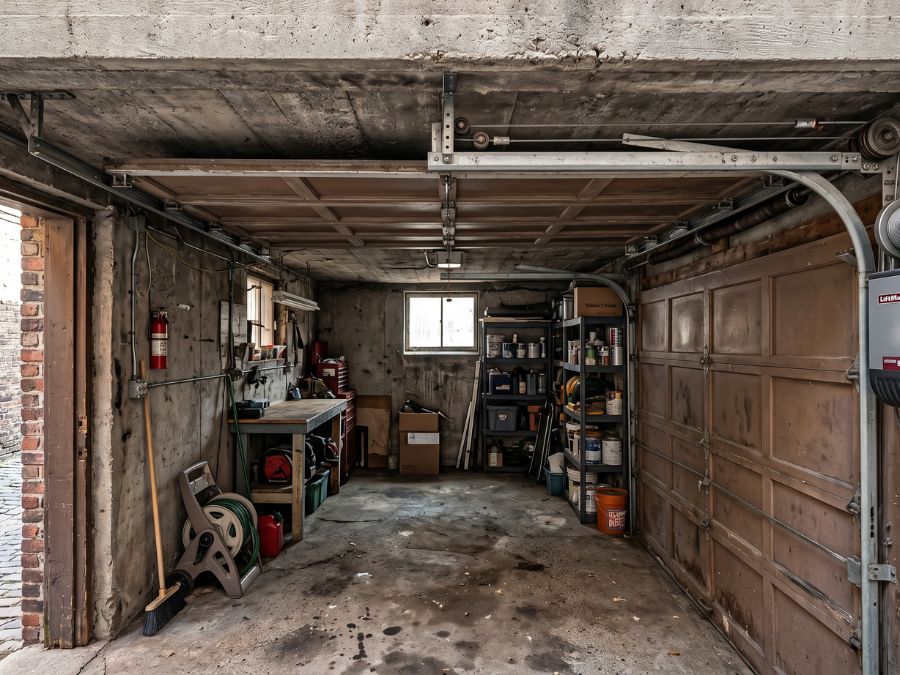
When we’re out in these areas, we’re not just replacing parts. We’re working inside garages that were built decades ago with tighter dimensions, lower ceilings, and minimal clearance. These garages were designed for smaller vehicles and simpler setups, not modern overhead door systems.
They are usually detached, accessed through narrow alleys, and built with just enough space to function, not extra space to accommodate today’s equipment. That difference is what drives most of the problems we see.
The Clearance Problem Most Homeowners Run Into
The biggest issue in these garages is headroom, and most homeowners don’t realize how tight that space actually is until we measure it.
In a standard modern garage, the door system requires what we call the “12-Inch Rule”—at least 12 inches of clearance between the top of the door opening and the ceiling to allow the tracks to curve. However, the historic reality of Central Phoenix is much different.
In neighborhoods like Willo, Coronado, and F.Q. Story, many “auto houses” were built with flat roofs or low-slung gables that offer only 3 to 6 inches of headroom. When you only have half the space required for a standard installation, you are in a “zero-clearance” situation.
Without enough room for the track to curve properly, a standard door will:
- Bind against the header.
- Scrape along the ceiling joists.
- Fail to open fully, leaving the bottom of the door hanging in the opening (a major risk for taller modern SUVs).
In these historic districts, we don’t just “force” a door to fit; we have to re-engineer the track logic using low-headroom double-track systems specifically designed for these 3-to-6-inch gaps.
Why Side-Mount (Jackshaft) Openers Are the Alley Garage Hero
In a narrow Coronado or Willo alley garage, ceiling space is one of the most valuable things you have.
Traditional garage door openers rely on a center rail that runs along the ceiling and typically hangs down a few inches. In a garage with limited headroom, that rail alone can make the difference between a door that works and one that doesn’t.
This is why we often switch to wall-mounted jackshaft openers in these environments.
By mounting the motor on the wall beside the door instead of overhead, we eliminate the need for a ceiling-mounted rail entirely. That frees up critical space and allows the door to sit tighter against the ceiling when open.
In many alley garages, this is not just a better option—it is the only setup that allows the system to function properly without interference.
Why Standard Garage Door Systems Don’t Work Here
A standard garage door system assumes consistent dimensions and enough space for all components to operate as designed. Alley garages in central Phoenix rarely meet those conditions.
What we typically see instead are openings that are slightly out of square, framing that has shifted over time, and concrete floors that are not level. These small inconsistencies create friction points throughout the system.
When a standard setup is forced into this environment, the result is almost always the same. The door binds, the tracks rub, and the system wears out faster than it should.
Most garage door problems in alley garages aren’t repair issues—they’re clearance problems that were never addressed correctly.
The Right Way to Fix Limited Clearance Issues
Fixing a garage door in a tight alley garage starts with reconfiguring the system to match the structure.
That usually involves installing a low-headroom double-track system that allows the door to operate with minimal vertical space. In shallow garages, we also use rear-mount torsion spring setups, which relocate key components to better fit within the available depth.
Opener selection is just as important. In many of these garages, a traditional overhead system simply won’t work safely or reliably. A jackshaft opener removes that limitation entirely by moving the operation to the side of the door.
These are not upgrades—they are structural adaptations that make the system compatible with the space.
The Backroom Problem Most People Miss
It’s not just about height. Depth, or what we call backroom clearance, is just as important.
In many alley garages, the space behind the door is limited. When the door opens, it travels back into the garage, and if there isn’t enough depth, it can hit shelving, beams, or even the back wall.
We run into this more often than homeowners expect. The door might technically fit the opening, but once it starts moving, it doesn’t have enough room to complete its travel.
This is where rear-mount torsion systems and careful track configuration make a difference. They allow us to control how far the door travels and how it sits when fully open.
The Reality of Working in Alley Access Garages
Access itself is another challenge that affects how the job gets done.
When we’re working in alley garages, we’re often dealing with narrow entry points that limit how equipment and materials can be brought in. In some cases, there’s barely enough room to position a vehicle nearby.
That means more of the work has to be done manually, and adjustments often need to be made on-site. These are not conditions you see in newer developments, and they require a more flexible installation approach.
Why Uneven Floors Make Everything Harder
Uneven concrete is one of the most common issues in these garages, and it affects both operation and sealing.
Many alley-side slabs settle faster than the house side, which creates a slight tilt in the floor. Even small differences in elevation can prevent the door from sitting evenly when closed.
One way we address this is by using adjustable bottom brackets. This allows us to fine-tune how the door meets the floor so it can “settle” into the uneven surface without leaving gaps.
Without that adjustment, you often end up with one side sealing correctly and the other side leaving space for dust, pests, and outside air.
The Reality Check Most Homeowners Run Into
We get a lot of calls after someone installs a standard system in one of these garages, and within a short time, the door starts binding or won’t open fully.
From the outside, it looks like a repair issue. But once we take a closer look, the real problem is that the system was never designed for the space.
The tracks are working against the clearance, the opener is under strain, and the door is operating outside of its intended configuration. At that point, the fix usually involves reworking the system, not just repairing it.
Common Mistakes That Make the Problem Worse
One of the biggest mistakes we see is trying to use a standard system because it’s readily available. It may seem like it fits, but it’s not designed for the space and will almost always create problems later.
Another issue is ignoring the structure itself. If the framing is off or the slab is uneven, the door will never perform properly, no matter how new the parts are.
Temporary workarounds are also common, but they tend to fail quickly and often make the underlying issue harder to fix later.
What a Properly Installed System Should Feel Like
When a garage door is set up correctly in a limited clearance alley garage, it should operate smoothly without resistance.
You should notice:
- The door opens fully without hesitation
- There is no rubbing or binding
- The door sits evenly when closed
- The system runs quietly and without strain
Even in a tight space, the door should feel controlled and balanced.
Why This Work Requires Experience in Central Phoenix
Alley garages in central Phoenix are not standard installations. Every structure has its own limitations, and those limitations affect how the system needs to be built.
When we’re working in these neighborhoods, we’re constantly adjusting for older construction, limited clearance, and unique layouts. The right solution is rarely obvious without experience in these conditions.
That’s why getting the setup right from the beginning makes such a difference.
Getting It Fixed the Right Way
If your garage door is struggling in a tight alley setup, the solution is not forcing a standard system to work. It’s building the system around the space you actually have.
A proper evaluation looks at the available headroom, backroom depth, track configuration, and structural condition of the garage. From there, the system can be adjusted to operate reliably within those limits.
If your door binds, rubs, or won’t open fully, it’s worth having it evaluated by a team that understands how these garages are built. A proper low-clearance conversion can make the difference between a system that constantly needs repair and one that works the way it should.