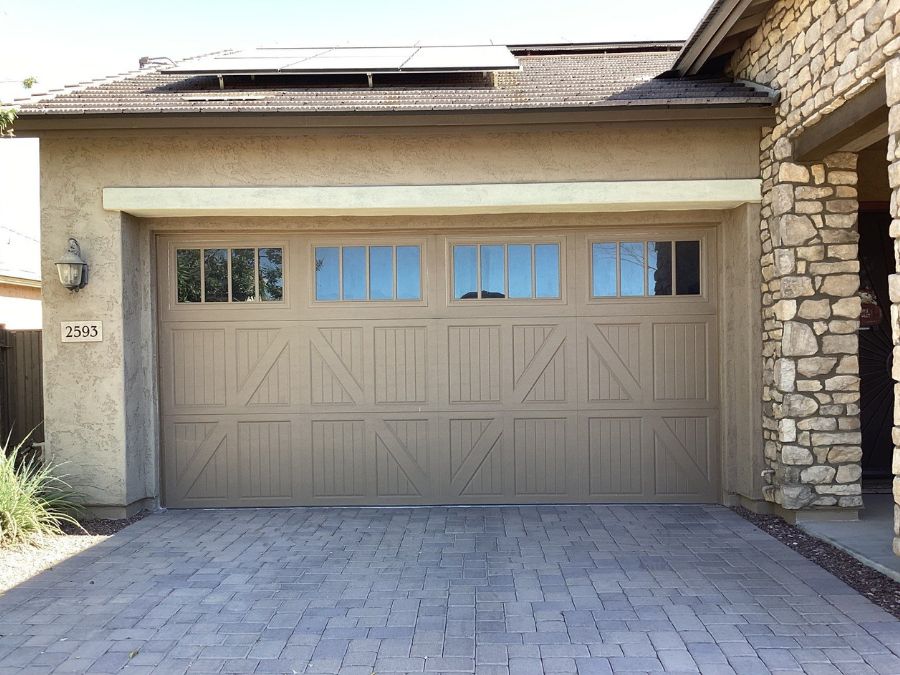
Are Insulated Garage Doors Worth It in Buckeye’s Desert Heat?
Quick Answer:
Yes, for most homeowners in Buckeye, an insulated garage door is well worth the investment. Arizona’s extreme summer temperatures place far greater demands on a garage door than homeowners in many other parts of the country experience. While an insulated garage door won’t keep your garage air-conditioned, it can significantly reduce heat transfer, create a more comfortable garage environment, help protect items stored inside, and reduce the strain that extreme temperatures place on your garage door system. The biggest benefits are typically seen in homes with attached garages, west-facing garage doors, or garages that double as workshops, home gyms, or storage spaces. If you’re already considering replacing your garage door, upgrading to an insulated model is often one of the smartest long-term decisions you can make.
Why Buckeye’s Climate Makes Garage Door Insulation More Valuable
In many parts of the country, garage door insulation is viewed as a comfort upgrade.
In Buckeye, it’s often a practical necessity.
Summer temperatures regularly exceed 110°F, and garage doors facing west or south absorb direct sunlight for hours each afternoon. By the end of the day, the steel surface of an uninsulated garage door can become dramatically hotter than the surrounding air, while the garage itself continues trapping heat well into the evening.
That lingering heat affects much more than the garage.
Many Buckeye homes have attached garages that share walls with kitchens, laundry rooms, hallways, or bedrooms. As the garage becomes hotter throughout the day, that heat naturally pushes against the shared walls, making it more difficult for adjacent rooms to stay comfortable. Even a well-insulated home can feel the effects when one of its largest openings is exposed to Arizona’s intense afternoon sun.
According to the U.S. Department of Energy, reducing unwanted heat transfer through the building envelope is an important part of improving overall energy efficiency. While a garage door is only one piece of that system, it plays a much larger role in Arizona than many homeowners realize.
The Biggest Benefit Isn’t Actually a Cooler Garage
When people hear the phrase “insulated garage door,” they often imagine walking into a cool garage during the middle of July.
That’s not what insulation is designed to do.
Instead, an insulated garage door slows the rate at which heat moves through the door. Rather than allowing the garage to become superheated as quickly during the afternoon, insulation helps moderate how rapidly temperatures rise inside the space.
That distinction is important.
A garage will still become warm during Buckeye’s summer months, especially if it isn’t air conditioned. However, slowing heat transfer can make the space noticeably more comfortable while reducing the amount of heat pressing against the walls shared with the rest of the home.
For many homeowners, that translates into rooms adjacent to the garage feeling more comfortable during the hottest part of the day—not because the garage is cold, but because it isn’t acting like a giant heat source radiating warmth into the house.
Your Garage Isn’t Just for Parking Anymore
Years ago, many garages were used almost exclusively to store vehicles.
Today, they’re often much more than that.
Many Buckeye homeowners use their garages as workshops, home gyms, hobby spaces, storage rooms, or places to keep seasonal decorations, tools, sporting equipment, and household supplies. Some garages even contain refrigerators, freezers, water heaters, or portions of the home’s HVAC system.
Those items all experience the same extreme temperatures as the garage itself.
While insulation won’t eliminate heat, it helps reduce the severity of temperature swings throughout the day. That creates a more stable environment for both the people using the garage and the equipment stored inside it.
Homeowners who spend time working on projects in the garage often notice the difference immediately. Others appreciate knowing that paints, power tools, batteries, and other temperature-sensitive items aren’t sitting inside a space that reaches its highest possible temperature every afternoon.
Insulation Also Protects the Garage Door Itself
One benefit that’s often overlooked is what insulation does for the garage door—not just the garage.
Every summer, garage doors in Buckeye expand under intense afternoon heat before cooling again overnight. That daily cycle repeats for months, placing continuous stress on the steel panels.
Single-layer garage doors are especially vulnerable because the exterior steel has very little structural support behind it. Over time, repeated expansion and contraction can contribute to panel flexing, popping noises, and the “oil-canning” effect that causes sections of the door to appear wavy or uneven in certain lighting.
Factory-insulated garage doors are built differently.
Rather than relying on a single sheet of steel, insulated doors use multiple layers that create a stronger overall structure. This added rigidity helps the door maintain its shape more effectively during Arizona’s extreme temperature swings while also reducing vibration as the door travels along the tracks.
The result is often quieter operation, smoother movement, and less stress on other components, including the opener, rollers, and hinges.
Not Every Home Needs the Same Level of Insulation
One of the biggest misconceptions about insulated garage doors is that every homeowner should simply buy the model with the highest advertised R-value.
In reality, the best choice depends on how the garage is used and how much heat it receives.
For example, a west-facing garage that sits in direct afternoon sun for several hours has very different insulation needs than a detached garage that’s shaded by mature trees. Likewise, a homeowner who spends weekends working in the garage will likely value insulation differently than someone who only opens the garage door a few times each day.
Many premium garage doors advertise insulation ratings between R-12 and R-16, although it’s worth noting that manufacturers don’t all measure R-values the same way. Some publish center-of-panel ratings, while others use overall door-system values. Because of those differences, comparing construction quality, weather sealing, and overall durability is often more useful than focusing on a single published number.
For most Buckeye homeowners, selecting a well-built insulated garage door that’s appropriate for the home’s orientation and daily use is a better long-term strategy than simply chasing the highest advertised R-value.
When Is an Insulated Garage Door Worth the Extra Investment?
Every homeowner has a different budget, so it’s reasonable to ask whether paying more for an insulated garage door will actually provide enough value.
For many homes in Buckeye, the answer is yes—but the reasons go beyond energy efficiency.
An insulated garage door is often a worthwhile investment if your garage is attached to the home, faces west or south, or serves as more than a place to park vehicles. These garages absorb intense afternoon sunlight and tend to retain heat well into the evening, making insulation especially beneficial. Homeowners who use the garage as a workshop, home gym, hobby space, or storage area often notice the greatest improvement because the environment becomes more comfortable and temperatures fluctuate less dramatically throughout the day.
Insulation also makes sense if you’re replacing an aging single-layer garage door. Since you’re already investing in a new door, upgrading to an insulated model typically provides additional benefits that you’ll appreciate throughout the life of the door, including quieter operation, greater durability, and improved structural strength.
When a Standard Garage Door May Be Enough
Although insulated garage doors offer significant advantages in Arizona’s climate, they aren’t automatically the right choice for every property.
For example, a detached garage that’s used only for parking and doesn’t share walls with the home may not experience the same benefits as an attached garage. Likewise, if the garage remains shaded for much of the day and is rarely occupied, a standard garage door may provide acceptable performance depending on your priorities and budget.
That’s why it’s important to evaluate how your garage is actually used rather than assuming every home requires the same solution.
The goal isn’t to purchase the most expensive garage door available—it’s to choose one that provides the best long-term value for your specific home.
Choosing the Right Garage Door Starts with Your Home
No two garages in Buckeye experience exactly the same conditions.
A west-facing garage in Verrado may spend hours in direct afternoon sun, while another home only a few miles away may benefit from neighboring houses, landscaping, or a different orientation that significantly reduces heat exposure. The age of the home, existing insulation, and even how often the garage door is opened throughout the day can all influence which option makes the most sense.
That’s why the conversation shouldn’t begin with a product brochure.
At Gecko Garage Doors, every recommendation starts with understanding the home itself. During a consultation, technicians evaluate factors such as the direction the garage faces, whether it’s attached or detached, how the space is used, the condition of the existing garage door, and whether the opener and spring system are appropriate for a heavier insulated door.
Those details help determine whether a homeowner would genuinely benefit from a premium insulated model or whether another option offers a better balance between performance and cost.
Rather than recommending the same garage door for every customer, the goal is to match the product to the home and the way it’s used every day.
Frequently Asked Questions
Will an insulated garage door reduce my electric bill?
It can help, particularly if your garage is attached to your home. By slowing heat transfer into the garage, an insulated door may reduce the amount of heat affecting adjacent rooms. The exact impact depends on your home’s insulation, garage orientation, and overall HVAC efficiency.
Will my garage stay cool with an insulated door?
No. An insulated garage door slows heat transfer, but it doesn’t air-condition the space. During Buckeye summers, the garage will still become warm, although temperatures typically rise more slowly than they would with an uninsulated door.
Is an insulated garage door quieter?
Yes. Most insulated garage doors operate more quietly because their multi-layer construction helps reduce vibration and panel movement during operation.
Is it worth replacing an older garage door just for insulation?
If your current door is aging, noisy, or showing signs of wear, replacing it with an insulated model can provide benefits beyond temperature control, including improved durability, quieter operation, and a stronger overall door structure.
Can I insulate my existing garage door instead?
DIY insulation kits can provide modest improvements, especially on older single-layer doors. However, they don’t offer the same structural strength, durability, or thermal performance as a factory-insulated garage door.
How long do insulated garage doors last?
A quality insulated steel garage door can often last 20 years or more with proper maintenance. Regular inspections, lubrication, and prompt repairs help maximize its lifespan regardless of the insulation type.
A Local Perspective for Buckeye Homeowners
Buckeye’s desert climate places unique demands on every garage door. Long stretches of triple-digit temperatures, intense afternoon sun, and constant thermal cycling create conditions that many homeowners in other parts of the country never experience. Choosing the right garage door isn’t simply about appearance—it’s about selecting a product that’s designed to perform reliably in those conditions year after year.
For many homeowners, an insulated garage door delivers value well beyond energy efficiency. It helps create a more comfortable garage, reduces stress on the garage door system, protects stored belongings from extreme temperature swings, and provides a stronger, quieter door that’s built to handle Arizona’s climate.
At Gecko Garage Doors, we’ve helped homeowners throughout Buckeye and the West Valley choose garage doors that fit their homes, budgets, and long-term goals since 1994. Whether you’re comparing insulated and non-insulated models or planning a complete garage door replacement, our team can explain your options and recommend a solution based on how your garage is actually used—not just the highest specification on a product sheet.
If you’re considering a new garage door, call or text (623) 546-8868 / (602) 892-9700 or schedule a consultation at https://geckogarage.com/contact/. We’re happy to answer your questions and help you determine whether an insulated garage door is the right investment for your Buckeye home.