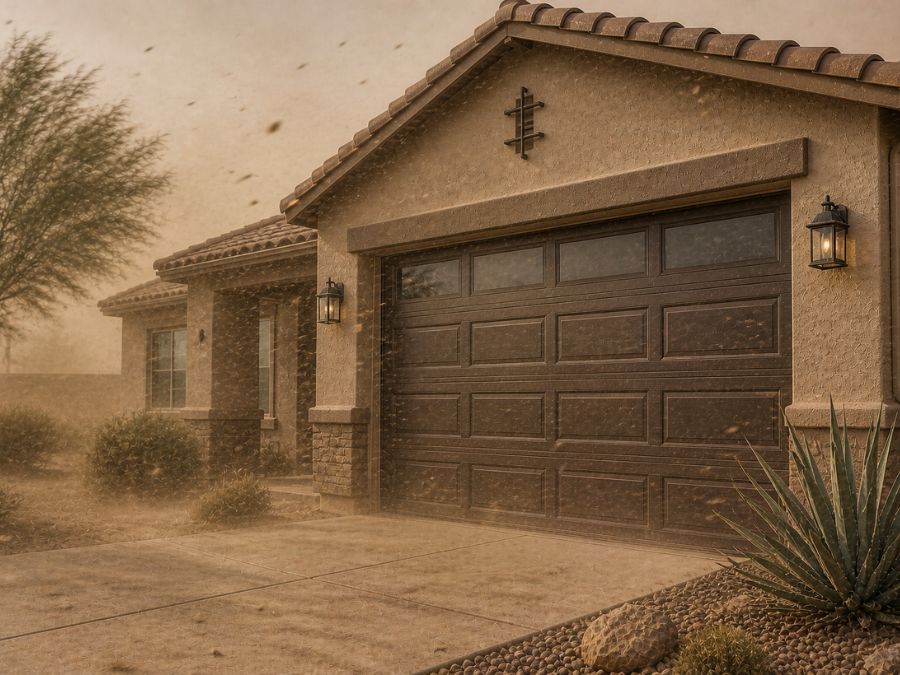
Can Gilbert, AZ Dust Storms Damage My Garage Door?
Yes, dust storms in Gilbert—especially haboobs—can damage your garage door over time. High winds, airborne debris, and fine dust can affect panels, tracks, seals, and moving parts. While not all damage is immediate, repeated exposure can lead to wear, noise, and reduced performance.
Why Dust Storms Are a Real Threat in Gilbert
Gilbert sits right in the path of Arizona’s monsoon season, where dust storms can roll in quickly. These storms carry fine sand, debris, and strong winds that hit exterior surfaces directly. Your garage door often takes that impact head-on.
Unlike regular wear, dust storms combine force and abrasion. That means your door isn’t just getting dirty—it’s being stressed by both wind pressure and particles hitting the surface. Over time, that adds up.
Even newer garage doors can be affected. It’s less about age and more about exposure.
How Wind Pressure Affects the Door
Strong winds during a haboob can push directly against the garage door. If the door isn’t reinforced or properly balanced, that pressure can cause flexing. Repeated stress like that may lead to misalignment or weakened panels.
In some cases, wind can even push debris into the tracks. That can interfere with how the door opens and closes. You may not notice it immediately, but the system can start to feel off.
For older or non-insulated doors, this effect is more noticeable. They tend to flex more under pressure compared to reinforced models.
The Hidden Problem: Dust Inside the System
The biggest issue isn’t always what you can see. Fine desert dust works its way into rollers, hinges, tracks, and bearings. Once inside, it mixes with lubricant and creates friction.
That’s when noise starts to develop. Grinding or rough movement is often the result of dust buildup inside moving parts. Over time, this can wear down components faster than normal.
This is one of the most common post-storm issues I see in Gilbert. It doesn’t always show up right away, but it builds over time.
Damage to Weatherstripping and Seals
Dust storms are tough on garage door seals. The bottom seal and side weatherstripping are designed to block out debris, but constant exposure can wear them down. Fine particles act almost like sandpaper over time.
You may notice cracks, gaps, or brittleness after repeated storms. Once the seal is compromised, more dust and heat can enter the garage. That creates a cycle of ongoing wear.
In Gilbert’s climate, seals tend to wear out faster than in other areas. Dust exposure is a big reason why.
Surface Damage and Fading
Airborne debris can impact the surface of your garage door during a storm. Small particles hitting at high speed can cause minor scratches or dull the finish. Over time, this affects how the door looks.
Combined with UV exposure, the finish can fade unevenly. This is more noticeable on darker-colored doors. What starts as cosmetic damage can eventually affect protective coatings.
Maintaining the finish helps extend the life of the door. It’s not just about appearance—it protects the material underneath.
How Tracks and Rollers Get Affected
Tracks are especially vulnerable during dust storms. Debris can settle inside and create resistance when the door moves. Even a small amount of buildup can change how the system operates.
Rollers also take a hit. Dust can enter the bearings and reduce smooth movement. That leads to noise and additional strain on the opener.
After a storm, this is one of the first areas worth checking. Keeping tracks clean makes a noticeable difference.
What to Check After a Dust Storm
After a storm passes, it’s a good idea to do a quick inspection. Look for visible debris in the tracks and wipe it out if needed. Check the seals to see if they’ve cracked or pulled away.
Open and close the door a few times and listen for changes. New noises or uneven movement are signs something needs attention. These small checks help catch problems early.
You don’t need a full inspection every time. Just paying attention goes a long way.
How to Protect Your Garage Door
Regular maintenance is the best defense against dust storm damage. Cleaning and lubricating moving parts helps prevent buildup from causing issues. In Gilbert, this should be done more often than in other climates.
Upgrading certain components can also help. Sealed nylon rollers and insulated doors handle dust and wind better than basic setups. Stronger materials reduce long-term wear.
Weatherstripping should be checked and replaced as needed. Keeping a tight seal limits how much dust gets inside in the first place.
When Dust Damage Becomes a Bigger Issue
If your garage door becomes noticeably louder, harder to move, or uneven after a storm, it may need more than basic maintenance. These signs can point to alignment issues or worn components. Ignoring them can lead to bigger repairs later.
In some cases, repeated dust exposure can shorten the life of key parts. Springs, rollers, and hinges all wear faster under these conditions. That’s when a deeper inspection makes sense.
Catching the issue early usually keeps the repair simple. Waiting too long tends to make it more complicated.
What This Means for Gilbert Homeowners
Dust storms are part of living in Gilbert, and your garage door is one of the first things they hit. While not every storm causes visible damage, the long-term effects are real. The combination of wind, dust, and heat adds up over time.
The goal isn’t to prevent exposure—it’s to manage it. With regular maintenance and a few smart upgrades, most of the damage can be minimized. That keeps your system running smoothly and lasting longer.
If your door feels different after a storm, it’s worth taking a closer look. Small changes are often the first sign something needs attention.