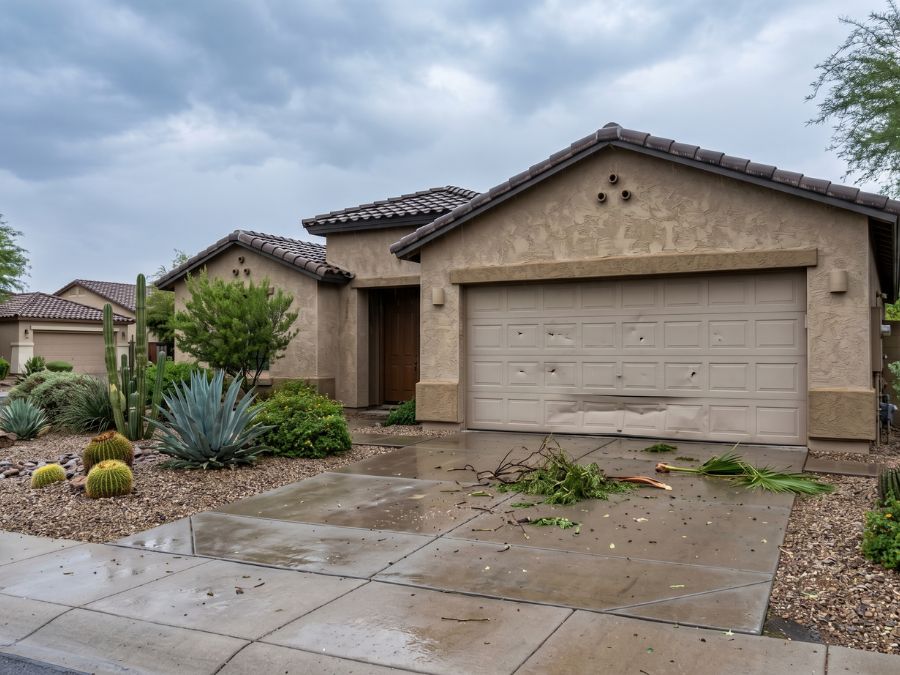
Does Homeowners Insurance Cover Garage Door Damage From a Monsoon in Chandler AZ?
Quick Answer:
Homeowners insurance in Chandler may cover garage door damage if it is caused by a sudden and accidental event like a microburst, hail, or flying debris. However, it usually will not cover the repair if the proximate cause is wear and tear, such as rusted springs, worn rollers, old hardware, or poor maintenance. Before opening a claim, it is smart to get a professional repair estimate first, because if the damage is less than your deductible, filing a claim may not make financial sense.
Why Does This Question Comes Up After Chandler Monsoons
Monsoon season in Chandler can leave homeowners dealing with a garage door that suddenly looks bent, sounds rough, will not close correctly, or has come off track after a strong wind event. Sometimes the damage is obvious. A panel may be dented by flying debris, a tree limb may hit the door, or high winds may push the door inward hard enough to bend the tracks.
In other cases, the damage is less clear. The door may still move, but it grinds, rattles, reverses, or no longer sits square in the opening. That is when homeowners naturally start wondering whether they are dealing with a basic repair, a maintenance issue, or an insurance claim.
The answer usually depends on what caused the damage. Most homeowners insurance policies are built around covered events, not just the fact that something broke. A sudden monsoon wind event is treated differently than a worn spring, old rollers, or a garage door system that has been slowly deteriorating for years.
The Simple Rule: Sudden Storm Damage Is Different From Wear and Tear
Homeowners insurance generally focuses on sudden and accidental damage. That distinction matters when it comes to garage doors because a storm can damage a door in several different ways. Wind, hail, flying debris, and impact damage may be reviewed differently than a noisy roller, worn spring, or opener that failed from age.
If a Chandler monsoon sends debris into the door and dents the panels, that may be treated very differently than a door that stops working because the rollers were already worn out. One situation points to a sudden storm event. The other may be considered normal maintenance or mechanical failure.
Insurance companies usually look for the proximate cause of loss, which means the main cause behind the damage. If the garage door was damaged because of a covered event, there may be a path to coverage. If the damage is traced to age, rust, poor maintenance, worn hardware, or a condition that existed before the storm, the claim may be denied or only partially considered.
What Monsoon Garage Door Damage May Be Covered?
Garage door damage may be covered when it is tied to a sudden and direct storm event. For example, if a microburst pushes the door inward, bends panels, damages tracks, or causes the door to come out of alignment, that may be reviewed as wind damage depending on the policy. The key is whether the damage appears sudden and connected to the storm.
Damage from flying debris may also be considered. During Chandler monsoons, strong winds can move trash bins, patio furniture, tree limbs, construction materials, loose fencing, and other objects. If something hits the garage door and leaves dents, cracks, bent sections, or damaged hardware, that visible impact can help support the claim.
Hail damage may also come into play during some monsoon storms. If hail dents the garage door panels or damages the exterior finish, the insurance company may review it as storm damage. Whether cosmetic damage is covered depends on the policy language, the severity of the damage, and the carrier’s inspection.
What Usually Is Not Covered?
Insurance usually does not cover garage door problems caused by ordinary wear and tear. If the door was already noisy, sagging, rusted, poorly balanced, or struggling before the monsoon, the carrier may determine that the storm did not cause the failure. It may have simply revealed a problem that was already there.
Common issues that are often treated as maintenance concerns include worn rollers, old springs, dry hinges, stretched cables, opener motor failure from age, cracked weather seals, and gradual panel deterioration. These problems can become more noticeable after a storm, but that does not automatically make them storm damage.
Flooding is another important exception. Monsoon rain can create street flooding, yard flooding, and water intrusion, but standard homeowners insurance often does not cover flood damage. Flood coverage is usually handled separately. This matters in low spots, homes with poor drainage, or garages where heavy runoff pushes water under the door.
The CLUE Report Warning
Before opening a formal claim, it is worth understanding how insurance history can follow a property. CLUE stands for Comprehensive Loss Underwriting Exchange, and it is a claims history database used by many insurers when reviewing property risk. A CLUE report can include information about past property insurance claims, including the type of loss and claim activity.
That does not mean a homeowner should avoid using insurance when there is real covered damage. It does mean small garage door claims should be handled thoughtfully. If the repair cost is close to or below the deductible, opening a claim may not be worth it, especially if the issue is minor or likely to be classified as maintenance.
In Chandler, where monsoon storms are common, it is smart to understand the damage before starting the formal claims process. A garage door technician can help determine whether the damage looks structurally storm related or whether it appears to be wear and tear. That information can help you decide whether the situation is worth discussing as a claim or better handled as a direct repair.
Attached Garage vs Detached Garage
Coverage can also depend on whether the garage is attached to the home or detached. An attached garage door is usually treated as part of the main dwelling because it is connected to the house. A detached garage may fall under other structures coverage, which can have different limits.
For most Chandler homeowners, the garage is attached to the home. This is common in older North Chandler neighborhoods, central areas near downtown, and newer communities throughout South Chandler. In these cases, the garage door is usually reviewed as part of the home’s exterior structure.
Detached garages, RV garages, casitas, workshops, and separate outbuildings may be handled differently. This can matter on larger lots around Riggs Road, custom homes, or properties with high clearance garage structures. The policy declarations page is the best place to confirm how those structures are categorized.
Chandler Monsoon Scenarios and How Insurance May View Them
If wind blows a large object into the garage door and dents the panels, that is more likely to be reviewed as sudden storm damage. The visible impact helps connect the damage to a specific event. Photos of the object, the door, and the surrounding storm debris can help show what happened.
If a microburst pushes the door inward and bends the tracks, that may also be considered storm related. The important question is whether the damage appears sudden and consistent with wind pressure rather than long term mechanical wear.
If the opener burns out after repeatedly trying to force a stuck door closed during a storm, the claim may be more complicated. The insurance company may ask whether the opener failed because of direct storm damage or because it was forced against a door that was already jammed, misaligned, or obstructed.
If the door grinds after a dust storm but has no visible physical damage, that is less likely to become an insurance issue. Dust in the tracks, dry rollers, and gritty hinges are usually maintenance concerns unless there is clear evidence of sudden physical damage caused by the storm.
Why Documentation Matters So Much
Garage door storm claims often come down to evidence. The more clearly you can show that the damage happened suddenly during a monsoon event, the easier it is for the insurance company to review the claim. Without documentation, storm damage and wear related damage can start to look similar after a few days of continued use.
Take photos before moving or cleaning anything if it is safe to do so. Capture wide shots of the garage door, closeups of dents or bent sections, debris near the door, damaged tracks, shifted weatherstripping, and any visible gaps around the opening. If a branch, outdoor item, or construction material hit the door, photograph that too.
It also helps to document neighborhood context. If you live in Ocotillo, Sun Groves, Cooper Commons, or another area that was hit hard, take photos of nearby downed branches, damaged fencing, blown debris, or storm impact in the immediate area. This helps show that a high wind event affected your specific part of Chandler, which can support the timeline and make it easier to separate storm damage from pre existing wear.
Write down the date and approximate time of the storm as well. Chandler monsoon cells can be highly localized, so a storm that hits hard near Ocotillo or the Price Corridor may not look the same across the rest of the Valley. Notes about wind, hail, flying debris, and when the door first stopped working can be useful when speaking with the insurance carrier.
Do Not Keep Forcing the Door After Storm Damage
If the door looks bent, crooked, off track, or unusually strained after a monsoon, do not keep running the opener. Continuing to use a damaged door can make the original problem worse and may complicate the insurance conversation. It can become harder to separate damage caused by the storm from damage caused by repeated operation afterward.
A garage door that has been hit by wind can have hidden problems. Tracks may be slightly shifted, rollers may be under stress, cables may be uneven, or panels may be flexed around the hinge points. The opener may still try to move the door, but that does not mean the system is safe or mechanically sound.
This is especially important with heavier insulated doors common in Ocotillo, Cooper Commons, Sun Groves, and newer South Chandler homes. These doors place more load on the spring and opener system. If one part is bent or misaligned after a storm, forcing the opener can turn a panel or track issue into a larger system repair.
What an Insurance Adjuster May Look For
An insurance adjuster will usually look for signs that match a covered event. That may include impact marks, bent panels, wind distortion, hail dents, damaged trim, damaged weatherstripping, or nearby storm debris. They may also look at whether other parts of the home show storm damage, such as roof edges, siding, gates, fencing, or exterior fixtures.
The adjuster may also look for signs of wear that existed before the storm. Rust, old dents, cracked rollers, long term sagging, worn hinges, and previous repairs can affect how the damage is interpreted. This does not automatically mean a claim will be denied, but it can influence what portion of the damage is attributed to the monsoon.
A garage door professional can help identify the mechanical condition of the door, but the insurance company determines coverage. That distinction matters. A technician can explain what is damaged and what likely caused the failure, while the carrier applies the policy language.
Should You File a Claim for Garage Door Damage?
Filing a claim depends on the severity of the damage, the likely repair cost, the deductible, and the policy terms. If the repair is minor and the deductible is high, a claim may not make financial sense. If the storm caused major panel damage, track damage, structural distortion, or a full door replacement need, it may be worth discussing with the insurance carrier.
Homeowners should also consider whether the damage affects security or safe operation. A garage door that will not close properly is more urgent than cosmetic dents. If the door is stuck open, unstable, or visibly bent, the first priority is making the home safe and preventing further damage.
The key is not to assume either way. Some garage door damage from a Chandler monsoon may be covered, and some may not. The cause of damage, policy language, deductible, claim history, and documentation all matter.
How Chandler’s Local Conditions Affect Claims
Chandler’s storm damage patterns can be different from other parts of the country. Monsoon wind, haboobs, heat baked seals, construction grit, and heavy garage door usage all overlap. That makes it especially important to separate sudden storm damage from maintenance related wear.
Around the Price Corridor and South Chandler, construction particulate can add abrasive grit to storm debris. In older neighborhoods near downtown, Galveston, and North Chandler, aging doors may already have worn hardware before the storm arrives. In communities like Ocotillo and Sun Groves, heavier insulated doors can make wind related strain more noticeable.
These local details matter because they help explain what happened mechanically. A monsoon may bend a panel, throw debris into the door, or shift the tracks. But heat, dust, age, and daily use can also contribute to wear that insurance may not treat as storm damage.
What to Do Before Calling Your Insurance Company
Before calling your carrier, gather basic information. Take photos, note the storm date, describe what changed, and avoid cleaning up the damaged area until you have documented it. If the door is unsafe, prioritize safety and access, but keep records of emergency work.
You can also get a garage door inspection to understand the actual damage. Ask for clear notes that separate visible storm impact from worn components or maintenance issues. This can help you make a better decision before starting a formal claim.
When you speak with the carrier, ask direct questions. Ask whether wind, hail, or flying debris damage to an attached garage door is covered. Ask how your deductible applies. Ask whether they need photos, an estimate, or an adjuster inspection before repairs begin.
FAQs
Does homeowners insurance usually cover garage door damage from monsoon wind?
It may, if the damage was sudden and caused by a covered wind event. Examples may include panels bent by wind, debris impact, hail damage, or track damage caused by a storm. Coverage depends on the policy.
Will insurance cover a garage door that came off track during a storm?
Possibly, if the door came off track because of sudden storm damage. If the cause is worn rollers, old hardware, poor balance, or lack of maintenance, it may not be covered.
Does insurance cover garage door opener damage?
It depends on the cause. If the opener was damaged by a covered storm event, the carrier may consider it. If the opener failed because of age, wear, overheating, or repeated forcing, it may not be covered.
Is dust storm damage covered?
Visible physical damage from wind or flying debris may be considered, but dust buildup, grinding rollers, dirty tracks, or normal maintenance issues usually are not treated the same way as storm impact damage.
Does homeowners insurance cover monsoon flooding in the garage?
Standard homeowners insurance usually does not cover flood damage. Flood coverage typically requires a separate flood insurance policy.
Should I call insurance before getting a garage door estimate?
It may be better to understand the likely repair cost first, especially if the damage appears minor. If the repair is below or close to your deductible, opening a claim may not be worthwhile. For major structural damage, visible storm impact, or an unsafe door, contact your carrier and follow their instructions.
Should I repair the garage door before the adjuster sees it?
If the door is unsafe or the home cannot be secured, emergency repairs may be necessary. Take photos first, keep receipts, and ask your insurance carrier what documentation they need. For non emergency repairs, it is often better to understand the claim process before replacing major components.
What photos should I take for a garage door insurance claim?
Take wide photos of the whole door, closeups of dents or bent sections, pictures of the tracks and rollers, photos of debris or impact marks, and images showing any gaps or alignment issues. Also photograph nearby storm damage, such as downed branches, damaged fencing, or blown debris, to help document that a storm affected your immediate area.
What This Means for Chandler Homeowners
Homeowners insurance can cover garage door damage from a Chandler monsoon, but only when the damage fits the policy’s covered causes. Sudden wind, hail, or debris impact is very different from wear, age, dust buildup, poor maintenance, or floodwater. That difference is what usually determines whether a garage door problem becomes an insurance claim or a standard repair.
If you are starting to explore your options, a professional inspection can help you understand what actually happened to the door, what appears storm related, and what may be normal wear. From there, you can make a clearer decision about whether to contact your insurance carrier, request an estimate, or handle the repair directly.