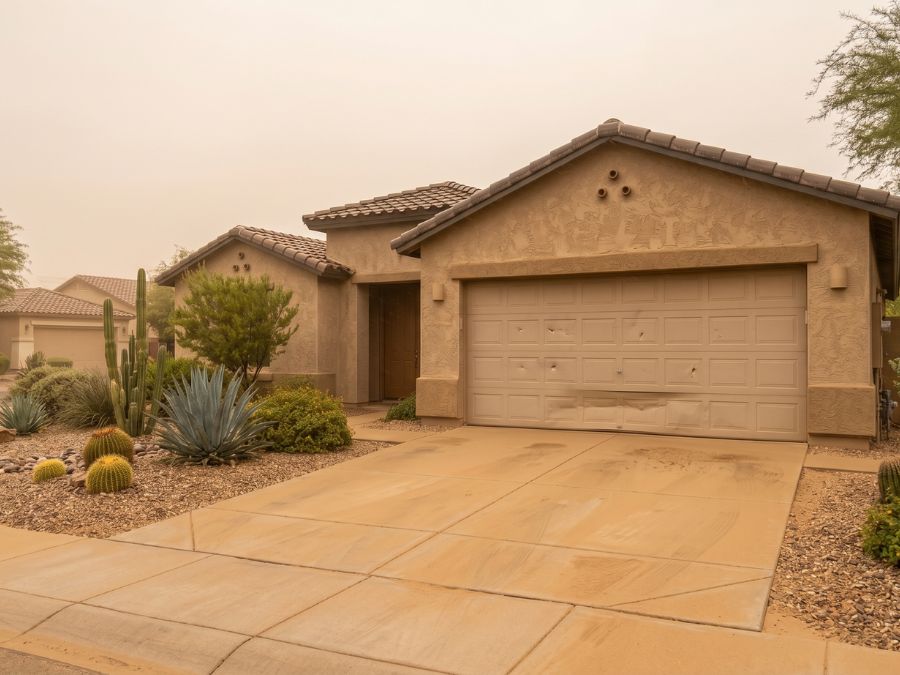
Why Is My Garage Door Grinding After a Dust Storm in Chandler?
Quick Answer:
A grinding garage door after a Chandler dust storm is usually caused by fine desert grit acting like mechanical sandpaper inside your rollers, tracks, hinges, and opener system. In the East Valley heat, that dust can mix with old grease and dried lubricant, forming an abrasive paste that makes the door drag, strain, and grind. The fix is not to spray lubricant on a dirty door. The tracks should be wiped clean first, then the moving parts should be serviced with a dry silicone or dry film lubricant that does not stay sticky and attract more dust.
That First Grinding Sound After a Storm
In Chandler, this usually happens in a very specific way that catches homeowners off guard. A dust storm rolls through the Valley, everything outside ends up coated in a fine layer of desert dust, and the next time you open your garage door, something feels wrong. Instead of the smooth, steady movement you are used to, the door makes a rough grinding, scraping, or dragging sound that was not there before.
Most homeowners notice it the next morning or the first time they leave the house after the storm passes. The door may still open and close, which makes the issue easy to dismiss at first. But that grinding sound is not random. It usually means dust, grit, or debris has gotten into the moving parts of the system and is now creating friction every time the door cycles.
What That Grinding Noise Actually Means
That grinding sound is not just an annoyance. It is a sign that your garage door system is dealing with resistance somewhere along its moving path. Garage doors are designed to move with balance and minimal strain, so when that movement becomes rough, something is interfering with the normal operation.
In Chandler, fine dust is one of the most common causes. During a haboob or monsoon wind event, dust gets driven into track channels, roller bearings, hinges, and opener components. Once it mixes with old lubricant, it can form a gritty buildup that works against the system instead of protecting it.
That gritty buildup acts like mechanical sandpaper. Instead of rollers gliding cleanly through the tracks, they start dragging. Instead of hinges flexing smoothly, they begin to bind. Over time, the system has to work harder just to complete a normal open and close cycle.
The Construction Grit Factor in Chandler
In parts of Chandler, the dust problem is not limited to desert soil. Around the Price Corridor, South Chandler, and areas near ongoing commercial or residential development, airborne grit can include construction silt and heavier particulate. That material can be sharper and more abrasive than ordinary dust.
This matters because garage door tracks and rollers are exposed mechanical parts. When construction grit gets inside the tracks, it can scratch, score, or slowly pit metal surfaces if it is allowed to sit there through repeated door cycles. A door may sound like it is simply grinding, but what is really happening is that the system is forcing rollers through abrasive debris.
This can be especially noticeable in neighborhoods like Ocotillo, Cooper Commons, and Sun Groves, where heavier insulated doors are common. A larger insulated door already puts more demand on the system. Add gritty tracks after a storm, and the rollers, opener, and torsion springs all have to work harder than they should.
What It Usually Sounds Like
The exact sound can vary depending on where the dust has settled and which components are affected. In many Chandler homes, the grinding starts as a low, gritty rumble when the door first begins to lift. This is often most noticeable near the bottom section of the door, where dust and debris tend to collect after a storm.
As the door continues to move, the sound may turn into a sharper scraping or dragging noise. That usually means the rollers are encountering resistance deeper in the track or that debris has spread beyond the lower section. In some cases, the door may hesitate briefly and then push through with a rough sound, which suggests the system is fighting friction at multiple points.
If the noise is paired with vibration through the wall, ceiling, or opener mount, the system is under added strain. That does not always mean something has failed yet, but it does mean the door is no longer moving as cleanly as it should.
Why This Happens So Often in Chandler
Chandler’s environment is hard on garage door systems because heat, dust, and daily use all work together. The dry air causes lubricants to break down faster. The summer heat bakes dust into moving components. Then a monsoon storm can drive fine debris into the system almost overnight.
West facing garage doors are especially vulnerable. In areas like Ray Ranch and other neighborhoods along the Price Corridor, afternoon sun can heat the door and surrounding hardware for hours. That heat can bake the dust and lubricant mixture onto the tracks and rollers, making the grinding worse once the door starts moving again.
Older North Chandler homes near Warner, Galveston, and the downtown core may have aging rollers, hinges, or hardware that are already more susceptible to friction. Newer South Chandler homes may have larger, heavier doors that make even a small amount of resistance more noticeable. Different parts of the city experience the issue in different ways, but the underlying cause is usually the same: dust, heat, and friction.
Why Heavy Insulated Doors Feel It More
Many newer Chandler homes, especially in areas like Ocotillo, Sun Groves, and Cooper Commons, have heavier insulated garage doors. These doors are popular because they help with heat control, noise reduction, and overall comfort, especially when the garage is used as a gym, workshop, or main entry point. But the added weight means the system needs to stay properly balanced and clean.
When grit builds up in the tracks, the door does not move as freely. That extra resistance forces the torsion springs to work harder to lift the door. Over time, that added strain contributes to torsion fatigue, which can shorten spring life and increase the chance of a sudden spring failure.
This is why a grinding sound on a heavy insulated door should not be ignored. The noise may start at the rollers or tracks, but the stress can travel through the entire system. If the door feels heavier than usual, hitches during travel, or sounds rough after a storm, the springs and rollers should be checked before the problem escalates.
The Most Common Problem Areas After a Dust Storm
Dust usually affects several parts of the garage door system at once. That is why the grinding may sound widespread instead of coming from one obvious location.
Tracks are often the first problem area. Even a thin layer of fine grit inside the track can disrupt smooth roller movement. Over repeated cycles, that debris can create drag, noise, and uneven travel.
Rollers are another major source of grinding. When dust gets into the bearings or builds up around nylon rollers, the rollers may stop spinning smoothly and begin sliding through the track. If this continues, the rollers can wear unevenly or develop flat spots that make the door sound even rougher.
Hinges and pivot points also suffer in Chandler’s climate. These components need clean movement to handle the bending motion of the door as it travels through the curved track. When dust mixes with old lubricant, hinges can bind, squeak, or grind under load.
Why All Purpose Sprays Can Make It Worse
One of the most common mistakes homeowners make is grabbing an all purpose spray and applying it directly to a noisy garage door. That may quiet the sound for a short time, but it can create a bigger dust problem if the system is dirty. Sticky sprays can trap grit and turn it into a paste that clings to rollers, hinges, and track edges.
For Chandler homes, a dry silicone spray or dry film lubricant is usually a better choice for moving garage door components. These products are designed to reduce friction without staying tacky. That matters in a dusty environment because the next storm is less likely to stick to the treated parts.
The order matters just as much as the product. The tracks should be wiped clean first, and lubrication should be applied only where appropriate, such as hinges, rollers, bearings, and moving metal joints. Garage door tracks should generally stay clean and dry rather than coated with lubricant.
What Happens If You Ignore It for a Couple Weeks
When grinding starts, the door often continues to operate, which can give homeowners a false sense of security. The opener still pulls, the door still moves, and everything may seem functional enough to leave alone. But every noisy cycle adds more wear to the system.
Over a couple of weeks, especially in homes where the garage door is used several times a day, small friction issues can become larger repairs. Rollers may wear unevenly, tracks may develop rough spots, and the opener motor may begin working harder than it should. The door may also start moving unevenly, which places additional stress on the spring system.
This is especially important in Chandler because many homeowners use the garage as the main entrance to the home. A door that cycles four to ten times a day will wear much faster when it is grinding through dust and grit. What starts as a cleaning and maintenance issue can become roller replacement, track adjustment, opener strain, or spring related repair if it is ignored.
What You Should Do Right Away
Once you hear grinding after a dust storm, the goal is to stop the abrasion before it causes damage. Start by looking for visible dust inside the tracks, around the rollers, and near the bottom of the door. If you can see a layer of fine grit, that is likely part of the problem.
Use a dry microfiber cloth or soft brush to clear the track channels and accessible areas around the rollers. Avoid using water or heavy cleaners inside the tracks because residue can attract more dust. The goal is to remove grit without leaving anything behind that will turn sticky in the heat.
After the system is clean, the moving components can be lubricated with the proper product. A dry silicone or dry film lubricant is usually better suited for Chandler than a sticky all purpose spray. If the grinding does not improve after cleaning and proper lubrication, there may already be roller wear, track misalignment, or hardware strain that needs professional attention.
A Chandler Monsoon Flush Tip
For west facing homes, especially in neighborhoods where afternoon sun hits the garage door directly, a simple post storm cleaning habit can make a big difference. When you see a visible layer of dust on your driveway, patio, or garage threshold, there is a good chance some of that dust has also reached the tracks and lower hardware.
A quick monsoon flush does not mean spraying the system with water. It means wiping the track channels with a dry microfiber cloth and clearing away loose grit before it has a chance to bake into the system. Keeping the tracks clean and bone dry is one of the best ways to prevent grinding after a storm.
This is especially helpful during monsoon season, when repeated dust events can stack on top of each other. A few minutes of cleaning after a storm can prevent weeks of noisy operation and unnecessary wear.
When It Is Not Just a Cleaning Issue
Sometimes the dust storm is simply exposing a problem that was already developing. If rollers were already worn, hinges were loose, or the door was slightly out of balance, the added friction from dust can make the issue obvious very quickly.
This is common in older homes near downtown Chandler, Arizona Avenue, and Galveston, where original or aging hardware may still be in place. It can also happen in custom homes around San Marcos Estates or near Riggs Road, where heavier doors and larger openings place more demand on the system.
If the door feels unusually heavy, jerks during travel, reverses unexpectedly, or continues grinding after cleaning, the issue likely goes beyond surface dust. At that point, the door should be inspected for worn rollers, spring fatigue, track damage, and opener strain.
How to Prevent This in Chandler
Garage door maintenance in Chandler should be built around the local environment. Dust storms, heat, construction grit, and heavy daily use all affect how long rollers, springs, hinges, and openers last. A system that might go longer between service in a milder climate needs more attention here.
Routine maintenance should include cleaning the tracks, inspecting rollers for flat spots or cracking, checking hardware tightness, testing door balance, and applying the right lubricant to moving components. The lubricant should reduce friction without attracting dust. The tracks should remain clean, dry, and free of buildup.
Homes near construction areas, open desert edges, or high wind corridors may need more frequent attention during monsoon season. The same is true for households that use the garage as the main entry point or have heavier insulated doors. A well maintained system can handle Chandler dust much better than one that is already dry, dirty, or out of adjustment.
FAQs
Is it safe to keep using my garage door if it is grinding?
It may continue to operate, but ongoing use can accelerate wear on the rollers, tracks, opener, and spring system. If the grinding started after a dust storm, it is better to clean and inspect the system early before the abrasive grit causes more damage.
Can I fix the grinding by spraying lubricant?
Not by itself. If dust or grit is still inside the system, spraying lubricant can trap debris and create a sticky abrasive paste. The tracks should be wiped clean first, then the moving parts should be treated with an appropriate dry silicone or dry film lubricant.
Should I lubricate the garage door tracks?
In most cases, no. Tracks should stay clean and dry so the rollers can move freely without collecting more dust. Lubrication belongs on the proper moving parts, such as hinges, roller bearings, and metal pivot points.
Why did this happen right after a storm if the door worked fine before?
Dust storms can push fine grit into the system very quickly. A door may be operating normally before the storm, then start grinding once dust settles into the tracks, rollers, and hinges. In Chandler, this can happen almost overnight during monsoon season.
Can construction dust make the grinding worse?
Yes. Around areas like the Price Corridor and South Chandler, construction silt can be sharper and more abrasive than ordinary desert dust. If it sits in the tracks and rollers, it can increase friction and speed up wear.
Does Chandler heat make the problem worse?
Yes. Heat dries out lubricant and can bake dust onto metal components, especially on west facing garage doors. Once dust and old lubricant harden together, the door has to work harder to move smoothly.
Why does my insulated garage door sound worse than my old door?
Insulated doors are heavier, so they are more sensitive to friction and balance issues. If dust builds up in the tracks, the rollers and torsion springs have to work harder to move the extra weight. That can make grinding sounds more noticeable and more urgent.
What This Means for Your Garage Door
A grinding sound after a dust storm is not random. In Chandler, it usually means fine grit has entered the system and is interfering with how the door is supposed to move. Heat, dust, construction particulate, and frequent daily use can turn that friction into real wear faster than many homeowners expect.
The best first step is to keep the tracks clean and dry, avoid sticky all purpose sprays, and pay attention to whether the door feels heavy, rough, or uneven. If you are starting to explore your options, a professional inspection can help you understand whether the issue is simple storm related maintenance or a sign of deeper wear in the rollers, tracks, opener, or spring system.