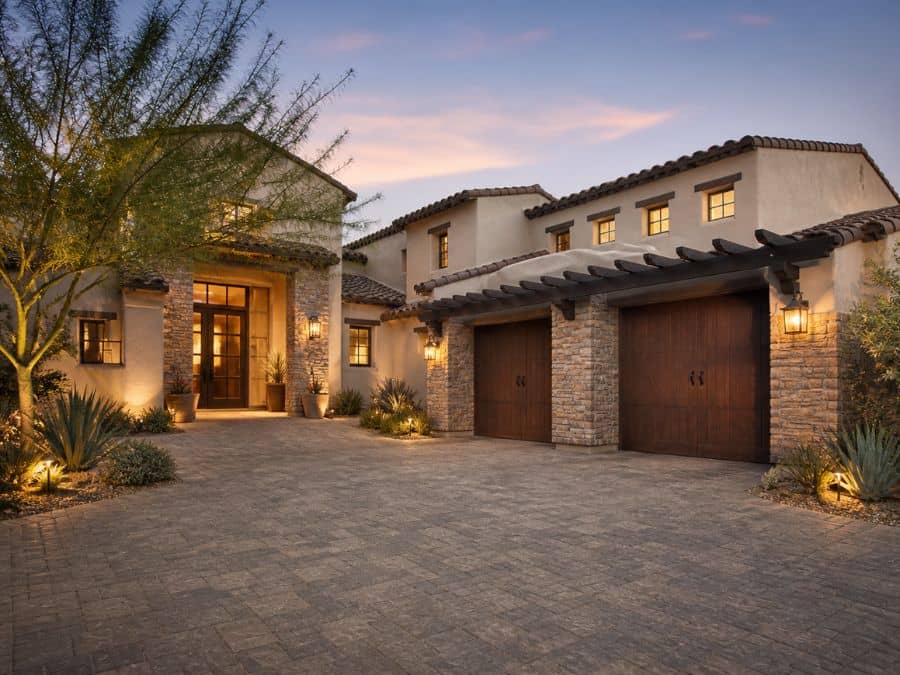
How Do I Get a Garage Door Replaced Inside a DC Ranch or Silverleaf HOA in Scottsdale?
Quick Answer:
Replacing a garage door in DC Ranch or Silverleaf requires submitting a Modification Application and getting approval from the Architectural Review Committee (ARC). These communities enforce strict standards on material authenticity, color, and architectural proportions. In many cases, approval must also come from both your village sub-association and the Master Association. Ordering a door before securing both approvals is one of the fastest ways to create delays, rejections, and unnecessary costs.
Why DC Ranch and Silverleaf Are Different From Typical HOAs
Not all HOAs in Scottsdale operate at the same level, and DC Ranch and Silverleaf sit at the very top when it comes to architectural control and enforcement.
When we’re working in these communities, we’re not just replacing a garage door—we’re aligning with a carefully maintained design system that defines the entire neighborhood. These homes are often custom-built, with exterior elements designed to complement each other across the property and even across the street.
Garage doors play a much bigger role than most homeowners expect. Because of their size and placement, they can either blend seamlessly into the architecture or disrupt the entire look of the home. That’s why these HOAs treat garage doors as a critical design component, not a secondary upgrade.
The Approval You Actually Need: ARC Review
Before anything gets ordered or installed, the project must go through the HOA’s Architectural Review Committee, or ARC.
This is a structured review process where your proposed garage door is evaluated in the context of your home’s architecture and the surrounding properties. You’ll need to submit detailed documentation, including manufacturer specifications, finish samples or references, and sometimes visual representations showing how the door will look once installed.
The ARC is not simply checking for quality—they are evaluating whether the door appears consistent with the home’s original design intent. Even high-end products can be rejected if they introduce visual inconsistency.
The “Layered HOA” Factor Most Homeowners Miss
One of the biggest surprises for homeowners in DC Ranch and Silverleaf is that approval doesn’t always come from a single entity.
Many properties fall under a layered HOA structure, where both a village-level sub-association and a Master Association have authority over exterior modifications. This means your garage door project may need to be reviewed twice, sometimes with slightly different expectations at each level.
In practice, this creates a situation where a design that passes one review may still need adjustments to satisfy the second. If this isn’t accounted for early in the process, it can lead to back-and-forth revisions and extended timelines.
Understanding this structure up front is what keeps projects moving instead of stalling in review cycles.
Why You Should Never Order the Door First
This is one of the most expensive mistakes we see, and it usually starts with the assumption that a “high-end” door will automatically be approved.
Homeowners select a door based on appearance or quality, place the order, and then submit it to the HOA. In these communities, that approach almost always leads to complications.
Custom garage doors often come with long lead times and limited return options. If the ARC rejects the design, you’re not just making a small adjustment—you’re potentially restarting the entire process with a new product.
That means additional cost, additional time, and often a delay that could have been avoided by starting with approval instead of selection.
What the HOA Is Actually Looking For
The ARC isn’t asking whether the door looks good—they’re asking whether it looks correct within the context of the home and neighborhood.
That typically means matching architectural cues that are already present. Panel proportions must align with the scale of the home, window placement needs to follow existing horizontal or vertical lines, and color must fall within a narrow range of approved tones.
In many cases, the goal is for the door to appear as if it has always been part of the home. Anything that feels like an addition or a deviation—even subtly—can trigger a rejection.
The “Material Authenticity” and Custom Cladding Problem
Material selection is one of the most common failure points, especially in Silverleaf.
Standard “wood-look” doors often lack the depth, variation, and realism needed to match surrounding architectural elements. When placed next to real wood beams, custom gates, or hand-finished entry details, those differences become obvious.
This is where custom cladding becomes essential. By using a structural steel base combined with real wood or high-definition composite overlays, we can achieve the durability needed for Phoenix conditions while still meeting the visual expectations of the HOA.
In higher-end applications, these finishes are often hand-stained or adjusted on-site to match existing elements like corbels, trim, or entry doors. That level of detail is what allows the door to pass review and blend into the home naturally.
The LRV and Glare Factor
In North Scottsdale foothill communities, desert integration isn’t just about color—it’s about how that color behaves under sunlight.
The ARC often evaluates the Light Reflective Value, or LRV, of a garage door finish. This measurement determines how much light is reflected off the surface, which directly affects glare.
In hillside areas like Silverleaf, a door with the wrong LRV can reflect sunlight into neighboring properties, creating a noticeable glare issue during certain times of day. Because of that, finishes are expected to fall within a range that minimizes reflectivity while still matching the home’s color palette.
This is a detail most homeowners don’t think about, but it’s one that can absolutely impact approval.
The Reality Check Most Homeowners Run Into
We get a lot of calls after a homeowner submits a door—or installs one—and it gets rejected during review.
At that point, the situation becomes much more complex. What started as a simple upgrade turns into a compliance issue, often with deadlines attached. The homeowner may need to revise the design, resubmit for approval, and in some cases, remove the installed door entirely.
In these communities, if the door doesn’t match exactly, the HOA can require full removal and replacement at the homeowner’s expense. That’s when a straightforward project becomes significantly more costly.
Timeline Expectations in High-End HOAs
Replacing a garage door in DC Ranch or Silverleaf takes longer than most homeowners expect, and the majority of that time is tied to approvals.
Between ARC review, potential sub-association approval, and revision cycles, the pre-installation phase alone can take several weeks. Once approval is secured, custom or semi-custom doors often require additional production time before installation can even be scheduled.
When you combine those factors, it’s common for the entire project timeline to extend well beyond what you’d expect for a typical garage door replacement.
Planning ahead is not optional—it’s necessary.
The “Side-Load Garage” Factor
Many homes in these communities are designed with side-loading garages to reduce their visual presence from the street.
While this helps maintain the overall aesthetic of the neighborhood, it does not reduce the level of scrutiny from the HOA. The same standards apply regardless of visibility, because the goal is consistency across the entire property and community.
We’ve seen homeowners assume they have more flexibility with a side-load configuration, but that assumption often leads to rejected submissions.
Why Working With the Right Team Matters
This isn’t just about installing a garage door—it’s about navigating a process that involves design, compliance, and execution.
When we’re working in DC Ranch or Silverleaf, we’re evaluating the project from the approval stage forward. That includes understanding HOA requirements, selecting materials that meet authenticity standards, and anticipating the details that commonly trigger rejection.
That level of preparation is what prevents delays and ensures the project moves forward without unnecessary setbacks.
What a Successful Replacement Looks Like
When the process is handled correctly, everything comes together smoothly.
The design is selected with HOA guidelines in mind, approvals are secured at every required level, and the door is ordered with confidence that it will pass. Installation happens without complications, and the final result integrates seamlessly with the home.
From the outside, it looks simple—but that simplicity is the result of getting every step right before installation begins.
Getting It Done Without Delays
If you’re planning to replace a garage door in DC Ranch or Silverleaf, the most important step is starting with approval—not the product.
Work from the guidelines first. Select a design that fits the community, secure all required approvals, and then move forward with ordering and installation.
If you’re planning a garage door replacement in DC Ranch or Silverleaf, working with a team that understands layered HOA approvals, material expectations, and design standards can save you time, money, and frustration. Getting it right the first time ensures a smooth process and a result that fits your home exactly the way it should.