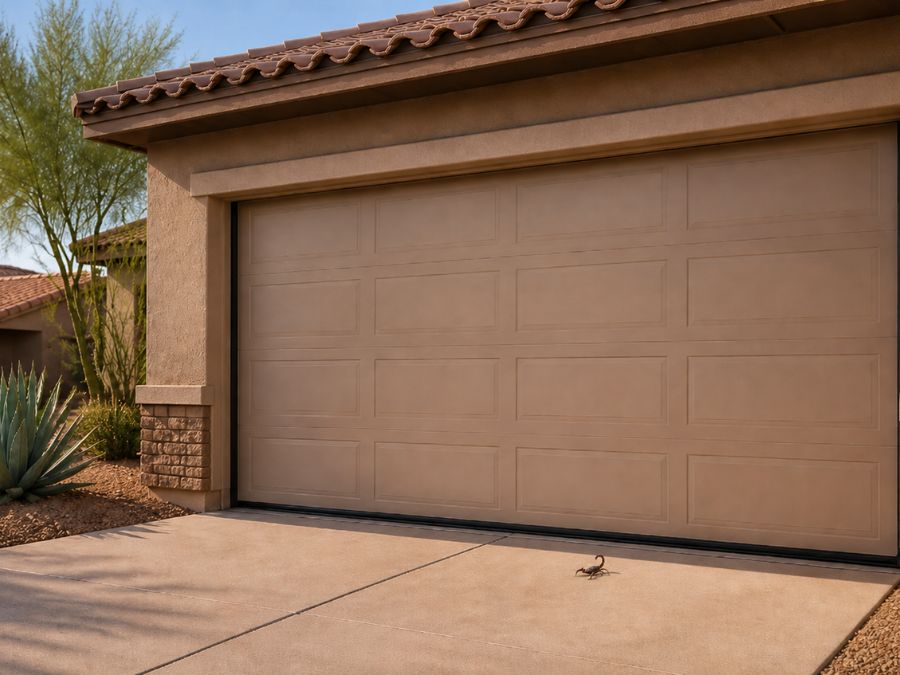
How Do I Keep Scorpions and Dust Out of My Garage in Gilbert AZ?
Quick Answer:
To keep scorpions and dust out of your Gilbert garage, you need to eliminate the light gap around the garage door. Bark scorpions can squeeze through extremely small openings, so if you can see sunlight under or around the door during the day, pests and dust can get in at night. The best solution is a complete seal system with heat-resistant EPDM bottom rubber, tight side and top weatherstripping, a threshold seal if the slab has settled, and proper door alignment so the seal compresses evenly.
Why Gilbert Garages Deal With Scorpions and Dust
Gilbert garages are naturally vulnerable to dust and pests because of how homes are used here. For many families, the garage is not just a place to park. It is the main entrance, bike storage area, sports gear zone, tool space, and sometimes a workout or hobby area. That means the door opens and closes often, and every cycle gives heat, dust, pests, and debris another chance to get inside.
The local environment adds to the problem. Gilbert still borders pockets of agricultural land, especially toward the south and east, and wind can carry thicker field dust into neighborhoods after dry stretches or monsoon activity. In communities like Power Ranch, Seville, and areas farther south of Germann Road, dust can feel heavier and grittier than ordinary desert dust.
Scorpions are drawn to cool, dark, protected spaces. The lower edge of a garage door creates exactly the kind of shelter they like, especially if the seal is cracked, curled, or leaving gaps at the corners. Once they find a small opening, the garage becomes an easy hiding place with boxes, shoes, tools, bikes, pet supplies, and storage bins.
The Light Gap Test
The simplest way to check your garage is to look for light. During the day, stand inside the garage with the door closed and the lights off. Look along the bottom, both sides, the top header, and the lower corners near the tracks. Any visible daylight is a potential entry point.
This test works because dust and pests do not need a large opening. A thin gap under the bottom seal or a small opening near the jamb can be enough for scorpions, spiders, crickets, and dust to enter. In Gilbert, where dust storms and dry heat are part of the normal garage environment, those small openings become noticeable fast.
If you see daylight, the issue may be the seal material, the concrete threshold, the door alignment, or the perimeter weatherstripping. The goal is not just to replace one piece of rubber. The goal is to create consistent contact all the way around the door.
The Garage Door Seal Is the First Line of Defense
The most important part of keeping scorpions and dust out is the seal system around the garage door. Most homeowners look at the large rubber seal along the bottom and assume that is the only thing that matters. It is important, but it is only one part of the system.
A proper seal includes the bottom weather seal, the side weatherstripping, the top seal, and the small corner areas where the vertical tracks meet the floor. If any of these areas leave a gap, dust and pests can still get in. A door can look closed from the driveway and still have enough space along the edges for scorpions, crickets, spiders, and dust to enter.
In Gilbert heat, seals dry out faster than homeowners expect. Rubber and vinyl can flatten, curl, harden, split, or shrink after repeated exposure to summer temperatures. Once the seal loses flexibility, it no longer compresses tightly against the concrete, and that is when the garage starts collecting dust lines, leaves, and pest activity near the threshold.
Why EPDM Rubber Is Better in Gilbert Heat
Not all garage door seals perform the same in East Valley heat. Standard vinyl seals can flatten, harden, or lose shape after repeated exposure to hot concrete and afternoon sun. Once that happens, the seal may look like it is touching the floor, but it no longer has enough compression to block dust and pests.
EPDM rubber, which stands for Ethylene Propylene Diene Monomer, is a stronger choice for Gilbert conditions. It is commonly used where heat, sunlight, and weather exposure are concerns because it holds its flexibility and compression better than many basic seal materials. That ability to return to shape is important because the bottom seal is compressed every time the door closes.
In practical terms, a better seal material helps prevent the thin July gap that appears when cheap rubber or vinyl flattens out. That gap may be small, but it is enough for dust trails, insects, and scorpions to find their way inside. For Gilbert garages, material quality matters as much as the installation.
The Vertical Climber Threat
Most Gilbert homeowners focus only on the floor, but the Arizona bark scorpion creates a different problem. Unlike pests that mostly stay low, bark scorpions are skilled climbers. They can move up vertical surfaces, including stucco edges, block walls, door frames, and the areas around garage door tracks.
That is why sealing the sides and top of the garage door matters just as much as replacing the bottom rubber. If the side weatherstripping has curled, pulled away, or hardened, a scorpion does not have to come under the door. It can climb the frame and find the opening along the side or top header.
This is especially important in neighborhoods like Power Ranch, Seville, Morrison Ranch, and other areas where garage doors are surrounded by stucco, decorative trim, and landscape beds. A true scorpion resistant seal is not just a bottom seal. It is a tight perimeter seal around all four sides of the door.
The Weep Screed Connection
Scorpions often travel along protected edges, and on stucco homes, one of those edges is the weep screed. The weep screed is the small gap or trim line near the bottom of the stucco that allows moisture to escape from behind the wall system. It is normal to have one, but it can also create a travel path around the exterior of the home.
When that path meets the garage door frame, any weak side seal becomes an easy entry point. A scorpion can move along the stucco edge, follow the frame, and slip through a gap where the side weatherstripping no longer presses tightly against the door. This is one reason homeowners may see pests even when the bottom seal looks acceptable.
Homes in Seville, Morrison Ranch, Agritopia, and other stucco heavy Gilbert neighborhoods should pay close attention to the vertical edges of the garage door opening. If the side seal is loose near the stucco or there is daylight along the jamb, the garage may still be vulnerable even with a new bottom seal.
Why the Bottom Seal Matters So Much
The bottom seal takes the most abuse because it touches the concrete every time the door closes. It also sits directly in the path of heat, dust, irrigation runoff, and pests. If the seal is brittle, flattened, or poorly matched to the floor, the door may close but still leave tiny openings along the threshold.
These small gaps matter. Scorpions do not need a large opening to get into a garage. Dust does not need one either. During a windy Gilbert afternoon or a monsoon dust event, fine grit can blow through uneven contact points and settle along the inside edge of the garage.
A healthy bottom seal should feel flexible and should compress evenly when the door closes. If you see daylight under the door, dry cracks in the rubber, curled edges, or dust trails forming inside the garage, the seal is no longer doing its job. Replacing it with a better heat resistant seal is often one of the most effective ways to reduce both pest entry and dust intrusion.
The Corner Gaps Are Usually the Weakest Spot
The bottom corners of the garage door are often where scorpions and dust sneak in first. These areas are tricky because the bottom seal, side seal, door track, and concrete floor all meet in one small space. Even when the main bottom seal looks decent, the corners may still have openings.
Gilbert homes with slightly uneven slabs or older garage openings often show this problem more clearly. You may see a small triangle of daylight near one or both corners when the door is closed. That gap may not seem serious, but it is enough for dust, pests, and small debris to enter.
Corner gaps are especially common on older doors near the Old Gilbert core, including homes around Guadalupe, Elliot, and Gilbert Road. They can also appear in newer communities when the slab has settled slightly or the door is not sitting square. If you are trying to keep scorpions out, the corners deserve as much attention as the bottom seal itself.
Side and Top Weatherstripping Matter Too
Dust and pests do not only come from under the door. They can also enter along the sides and top if the weatherstripping is worn, loose, or pulling away from the frame. During a windy day, you may even see dust collect in vertical lines along the edges of the door.
Side weatherstripping should lightly contact the face of the garage door when it is closed. It should not be so tight that it drags heavily, but it should close the visible gap between the door and the frame. If it is curled, stiff, cracked, or missing sections, wind can push dust around the edges and pests can use those openings as access points.
The top seal also matters, especially when wind hits the front of the home or when pests climb the vertical frame. Gaps along the top can allow dust to blow in and give climbing pests a hidden route into the garage. For homes in open areas like Power Ranch, Seville, or neighborhoods near wider roads and fields, a complete seal system makes a noticeable difference.
Gilbert Dust Is Not Always Fine Desert Powder
Many homeowners think of Arizona dust as light desert powder, but Gilbert dust can be grittier depending on where you live. Areas closer to remaining agricultural land, construction activity, or open lots may see heavier particles blow into the garage during monsoon season. That dust can settle into tracks, roller areas, storage bins, and the bottom seal.
Near areas like Morrison Ranch, Cooley Station, Power Ranch, and newer growth corridors, the dust may include agricultural silt, disturbed soil, and construction grit. When that material blows into the tracks, it can act like sandpaper on the rollers and metal surfaces. Over time, that grit can contribute to pitting, grinding, and extra strain on the opener.
That means sealing the door is not only about keeping the garage cleaner. It also protects the mechanical system. By reducing dust intrusion, you help prevent abrasive grit from wearing down rollers, collecting in the tracks, and forcing the opener to work harder than it should.
The Dry Heat Varnish Problem
Dust becomes more damaging when it mixes with old lubricant. In Gilbert’s dry heat, garage door lubricants do not always stay smooth and clean. Over time, they can thicken into a sticky varnish that traps dust around hinges, rollers, and track edges.
Once that happens, the door may start sounding rough or moving more slowly. The opener may also work harder because the rollers are no longer moving through a clean path. This is especially common after repeated dust events when the lower door area has not been wiped down.
The best approach is to keep the tracks clean and dry, then lubricate only the appropriate moving parts with a product suited for garage doors. Over lubricating the tracks can attract more grit and make the problem worse. In Gilbert, clean beats sticky.
Scorpions Like What Garages Provide
Scorpions usually enter garages because the conditions work in their favor. They like protected areas that are dark, quiet, and close to other insects. A cluttered garage can give them plenty of hiding places, especially near cardboard boxes, storage piles, shoes, pet food, tools, and outdoor gear.
In Gilbert family homes, the garage often contains exactly those items. Bikes, helmets, scooters, camping gear, sports equipment, and storage bins can create cool pockets where pests hide during the day. If crickets, roaches, or spiders are also present, scorpions have a food source nearby.
Keeping scorpions out is not only about the door seal. It is also about making the garage less inviting once they get near it. Reducing clutter along the walls, keeping boxes off the floor when possible, sealing pet food, and clearing insects from the garage perimeter can all reduce the reasons scorpions want to stay.
The Threshold Seal Option
For garages with uneven concrete or persistent gaps under the door, a threshold seal may help. This is a raised rubber strip installed on the garage floor where the bottom seal lands. It helps create a tighter barrier against dust, water, leaves, and pests.
A threshold seal can be especially useful if the concrete slopes slightly, the bottom seal cannot make even contact, or dust keeps appearing along the same section of the door. It gives the rubber seal a more consistent surface to compress against. In neighborhoods with older slabs or minor settlement, this can make a significant difference.
The threshold has to be installed correctly. If it is too tall, poorly positioned, or mismatched to the door seal, it can interfere with closing or create new gaps. The goal is to improve contact, not force the door into an unnatural position.
How Track Alignment Affects Gaps
Sometimes pest and dust problems are not only caused by bad seals. If the garage door is not sitting square in the opening, even new weatherstripping may not solve the issue. Track alignment, roller wear, spring balance, and slab movement can all affect how the door lands.
Gilbert’s expansive clay soil can contribute to subtle movement around some homes. Small foundation or slab shifts may not create a major structural issue, but they can change the way a garage door meets the floor. A small shift can create a gap at one corner or cause one side of the door to seal tighter than the other.
If the door looks uneven, leaves a diagonal gap, rubs heavily on one side, or does not sit flat when closed, the system may need adjustment. Replacing the bottom seal alone may help temporarily, but the real issue may be how the door is landing.
A Practical Garage Sealing Routine for Gilbert Homes
Start with a simple inspection during the day. Stand inside the garage with the door closed, turn the lights off, and look around the bottom, sides, and top of the door. Any visible daylight should be treated as a possible dust and pest entry point.
Next, inspect the seal material. The bottom seal should be flexible, not brittle, flattened, or curled. The side and top weatherstripping should contact the door evenly. If the corners show daylight, they may need special attention because they are common entry points.
After windy days or monsoon dust events, wipe the track channels and threshold area with a dry microfiber cloth or soft brush. Avoid hosing the tracks or soaking the lower hardware because moisture can attract more dust and may affect metal components over time. The cleaner and drier the lower door area stays, the less inviting it becomes for pests and the less abrasive it is for the door system.
What Not to Do
Do not rely only on pest spray if the garage door has visible gaps. Spray may reduce activity temporarily, but it does not fix the entry point. If the bottom seal is cracked, the side weatherstripping is curled, or the top seal is open, scorpions and dust will keep finding their way in.
Do not stuff towels, foam, or random objects under the garage door as a long term fix. These materials can interfere with the door closing properly, trap moisture, attract pests, and create uneven pressure on the bottom section. A garage door needs a clean, consistent seal that works with the door system.
Do not over lubricate the tracks to trap dust. Tracks should generally stay clean and dry. Lubricant belongs on appropriate moving components, not as a coating inside the track channels. In Gilbert heat, excess lubricant can turn sticky and collect even more grit.
When a New Seal Is Not Enough
If you replace the seal and still get dust lines, pests, or daylight gaps, the problem may be deeper. The door may be out of alignment, the slab may be uneven, the weatherstripping may be installed poorly, or the bottom corners may need a better sealing approach.
You may also have pest entry points elsewhere in the garage. Utility penetrations, side doors, wall cracks, vents, weep screed paths, and gaps around exterior trim can all allow pests inside. A garage door seal is the first line of defense, but it is not the only possible entry point.
That said, the garage door is often the largest and most overlooked opening. Because it moves every day, its seals wear faster than fixed exterior doors. If the goal is to reduce scorpions and dust in a Gilbert garage, the garage door system is usually the best place to start.
FAQs
Can scorpions really get under a garage door?
Yes. Scorpions can squeeze through very small gaps, especially near the bottom corners of the garage door. If you can see daylight under or around the door, pests may be able to enter.
Can scorpions climb garage door tracks?
Yes. Arizona bark scorpions are strong climbers and can move along vertical surfaces near garage door frames, tracks, stucco, and weatherstripping. That is why the side and top seals matter as much as the bottom seal.
What is the best garage door seal for keeping scorpions out?
A heat resistant EPDM bottom seal is a strong option for Gilbert because it holds compression better in extreme heat than many basic vinyl seals. For uneven concrete, a threshold seal may also help. The best setup depends on the door, slab, and size of the gaps.
Why is there so much dust inside my Gilbert garage?
Dust can enter through worn bottom seals, side gaps, top gaps, corner openings, and frequent door use. Gilbert’s agricultural dust, monsoon winds, construction activity, and dry heat can all make the problem worse.
Will a threshold seal stop dust completely?
It can greatly reduce dust coming under the door, especially if the floor is uneven, but it may not stop every particle. Side seals, top weatherstripping, corner gaps, and overall door alignment also matter.
Should I spray for scorpions inside the garage?
Pest control can help, but it should not be the only solution. If the garage door has gaps, scorpions may continue entering. Sealing entry points and reducing clutter are important parts of long term prevention.
Why do scorpions hide near the garage door seal?
The bottom seal creates a cool, dark edge with small protected spaces. If there are insects nearby, clutter along the walls, or gaps into the garage, that area becomes attractive to scorpions.
Can an old garage door cause more dust and pest problems?
Yes. Older doors may not sit square, and older seals often become brittle, flattened, or cracked. If the door no longer seals tightly against the floor and frame, dust and pests have more ways in.
How often should garage door seals be replaced in Gilbert?
There is no single timeline, but Gilbert heat can age rubber and vinyl quickly. If the seal is cracked, stiff, flattened, curled, or allowing daylight through, it is time to replace it.
What This Means for Gilbert Homeowners
Keeping scorpions and dust out of a Gilbert garage starts with eliminating the light gap. The bottom seal, side weatherstripping, top seal, corner areas, threshold contact, and door alignment all need to work together. If one part fails, pests and dust will usually find it.
A clean, tight, properly aligned garage door does more than improve comfort. It helps protect stored belongings, reduces pest activity, keeps gritty agricultural dust out of the tracks, and makes the garage feel more usable for the way Gilbert families actually live. If you are starting to explore your options, a professional inspection can help identify where dust and pests are getting in and whether the solution is a new EPDM seal, threshold upgrade, perimeter weatherstripping, door adjustment, or a more complete garage door tune up.