Does Homeowners Insurance Cover Garage Door Damage From a Haboob in Arizona?
Quick Answer:
In most cases, homeowners’ insurance in Arizona will cover garage door damage from a haboob if the damage is sudden and caused directly by wind or debris. However, claims are often denied if the insurance company determines the door was already worn, poorly maintained, or structurally weakened before the storm.
Will Your Claim Likely Be Approved? A Quick Reality Check
Before filing a claim, it is important to look at both the damage and the financial side of the situation. Many homeowners focus only on whether the damage qualifies, but the numbers behind the claim can matter just as much.
If the damage happened instantly during the storm, that strengthens your position. Sudden events are exactly what insurance is designed to cover, especially when tied to a known haboob or microburst in the Glendale area.
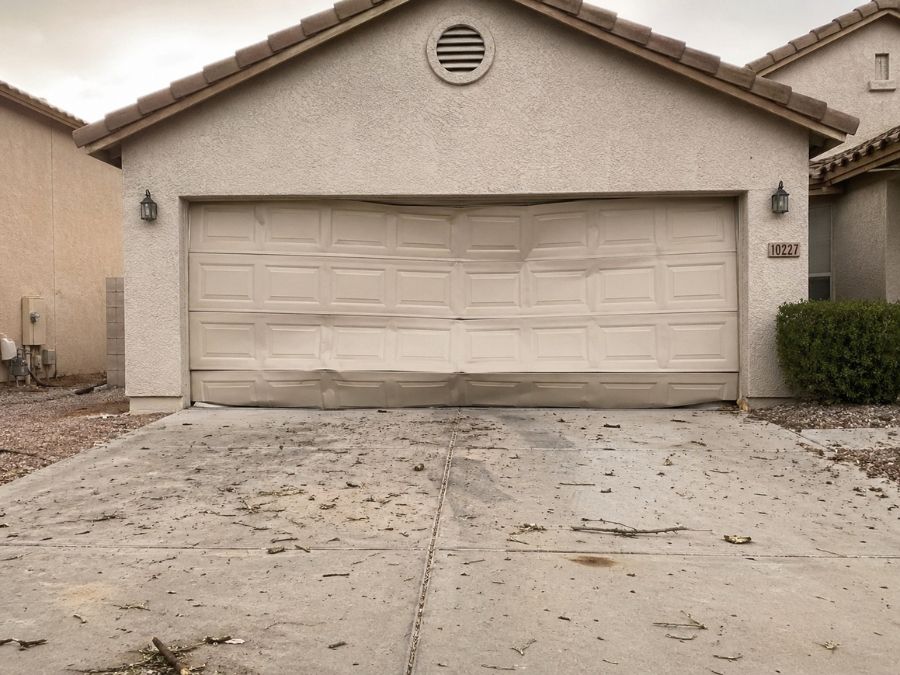
Visible structural damage also plays a major role. Bent panels, a door pushed inward, or impact marks from debris are clear indicators that the storm caused the issue. These types of conditions are much easier to defend during a claim review.
If the door was already shaking, noisy, or struggling before the storm, the claim becomes more difficult. In those cases, the adjuster may argue that the storm only accelerated existing wear rather than caused a new failure.
There is also the deductible factor, which many homeowners overlook. In Arizona, wind or hail deductibles are often based on a percentage of your home’s insured value. A 1 percent or 2 percent deductible on a $ 500,000 home can mean paying $5,000 to $10,000 out of pocket. If your garage door repair is only fifteen hundred to twenty-five hundred dollars, filing a claim may not result in any payout and could still affect your future premiums.
How Insurance Companies View Haboob Damage in Arizona
In Arizona, haboobs are classified as windstorms, and wind damage is generally included in standard homeowners’ policies. That part is straightforward, but how the claim is evaluated is where things become more complex.
Insurance companies focus on what is called the proximate cause. This means they are trying to determine whether the storm directly caused the damage or simply exposed a system that was already failing.
In Glendale and the West Valley, this distinction matters more because garage doors experience accelerated wear from heat, UV exposure, and dust. Adjusters are aware of these local conditions, which means they tend to look more closely at the pre-storm condition of the door.
What Garage Door Damage Is Usually Covered
The strongest claims involve clear, sudden structural failure tied directly to wind pressure or impact.
One of the most common covered scenarios is microburst buckling. This happens when high-pressure wind pushes the center of the door inward, sometimes creating a visible V shape or bowing across the panels. Homeowners often describe hearing a loud bang during the storm, followed by immediate damage.
Debris impact is another common example. If wind driven objects like branches, roofing material, or loose outdoor items strike the door and leave visible dents or holes, that supports a sudden loss claim.
Off track events may also be covered if a strong gust physically forces the rollers out of the track. However, this is usually only approved if the tracks and hardware were secure before the storm.
What Insurance Companies Usually Push Back On
This is where most claims start to break down.
If the door shows signs of UV degradation, such as fading, brittleness, or surface breakdown from years of extreme heat exposure, the adjuster may argue that the structure was already weakened.
Lack of maintenance is another common issue. Rusted hinges, loose mounting bolts, or worn rollers are often classified as neglect rather than storm damage.
Gradual failure is the most difficult to prove. If the door simply stops working after a storm but does not show clear structural damage, the insurer may attribute it to dust buildup, worn components, or normal wear over time.
In Glendale, these conditions are extremely common, which is why claims often receive more scrutiny here than in other regions.
What Insurance Adjusters Actually Look For in 2026
Modern insurance inspections are far more detailed than most homeowners expect.
Adjusters now use high resolution imaging and advanced analysis tools to detect signs of long term wear. They may look for fading, surface breakdown, or discoloration that indicates the door was already deteriorating before the storm.
They also rely on historical imagery to evaluate the condition of the home prior to the event. If the door shows signs of sagging or wear in earlier images, it can weaken your claim.
During the physical inspection, they will test hardware stability. If track brackets or mounting bolts are loose enough to move by hand, they may argue that the misalignment was not caused by the storm, but by lack of maintenance.
Understanding how detailed this process is helps explain why documentation and preparation are so important.
What To Do Immediately After Damage Happens
The first steps you take after a haboob can directly impact your claim outcome. Taking a structured approach helps protect both your property and your position with the insurance company.
- Document everything first. Take at least ten clear photos from different angles, including wide shots of the full door and close ups of damage.
- Record video evidence if it is safe. Showing how the door moves or struggles can help demonstrate structural issues that are not obvious in photos.
- Save local weather data. Capture screenshots or notes showing wind speeds or storm activity in Glendale, especially near your neighborhood.
- Prevent further damage. If the door is stuck open or unstable, secure the opening and keep receipts for any emergency service. These costs are often reimbursable.
- Get a professional inspection. A written report stating that the damage is consistent with sudden wind load failure can significantly strengthen your claim.
The Biggest Mistakes That Get Claims Denied
Even when damage is legitimate, certain mistakes can weaken a claim.
Making repairs too quickly without documentation is one of the most common issues. Once the original damage is altered, it becomes harder to prove what happened.
Providing limited or unclear photos can also hurt your case. Adjusters rely heavily on visual evidence, and poor documentation creates uncertainty.
Waiting too long to file a claim makes it harder to connect the damage to a specific storm event. Timing matters more than most homeowners realize.
Finally, ignoring pre-existing issues can backfire. Even small signs of wear may be used to argue that the damage was not caused solely by the storm.
Why Glendale Homeowners Face More Claim Challenges
Garage doors in Glendale operate under some of the harshest conditions in Arizona. Extreme heat, constant sun exposure, and frequent dust storms all contribute to faster wear.
Areas near the Agua Fria corridor and open desert zones experience stronger and more concentrated haboobs. This increases both the likelihood of damage and the level of scrutiny from insurers.
Because these environmental factors are well known, adjusters in the West Valley tend to be more strict when separating storm damage from long term wear.
The Role of a Professional Inspection
A professional inspection can serve as a critical second opinion during the claims process.
Garage door technicians can identify whether the damage pattern matches a sudden wind load failure or a gradual breakdown. They can also provide technical language that supports your case in a way that aligns with how adjusters evaluate claims.
In many cases, a written report helps bridge the gap between what the homeowner sees and what the insurance company needs to approve a payout.
How to Strengthen Your Position Before the Next Storm
The best way to improve your chances of coverage is to maintain your system before damage occurs.
Keeping hardware tight, replacing worn rollers, and ensuring proper alignment reduces the likelihood that damage will be classified as maintenance related.
Adding reinforcement or upgrading to a wind rated door also strengthens your position. A well maintained system is easier to defend because it shows that failure was not due to neglect.
In Glendale, where haboobs are a recurring risk, this kind of preparation can make a significant difference.
What This Means for Homeowners in Glendale
Garage door damage from a haboob can be covered, but approval depends on how clearly the damage is tied to the storm.
In the West Valley, the line between storm damage and long term wear is where most claims are decided. Understanding how that line is evaluated gives you a clear advantage.
If you are unsure how your situation will be viewed, a professional inspection can help you understand your position before you move forward. Taking the time to assess both the damage and the financial side of the claim can help you avoid unnecessary stress and make more informed decisions moving forward.