Why Does My Garage Door Grind After a Haboob Dust Storm in Phoenix?
If your garage door starts grinding after a Phoenix haboob, dust or debris may be affecting the rollers, hinges, tracks, or opener. The storm may also make a worn part easier to notice. If the noise continues after loose debris is cleared, pay attention to where it starts and how the door moves.
Start by Finding Where the Noise Comes From
Listen to where the grinding starts. If the sound follows one side of the door, the rollers, hinges, or track may be involved. If it stays near the opener motor or rail, the opener may need attention.
Watch the door during a full cycle too. If it shakes, scrapes, slows down, or makes noise at the same point every time, that can help narrow down the source. For example, grinding that starts halfway up may point to one section of the track or nearby hardware.
How Phoenix Dust Can Affect the Door
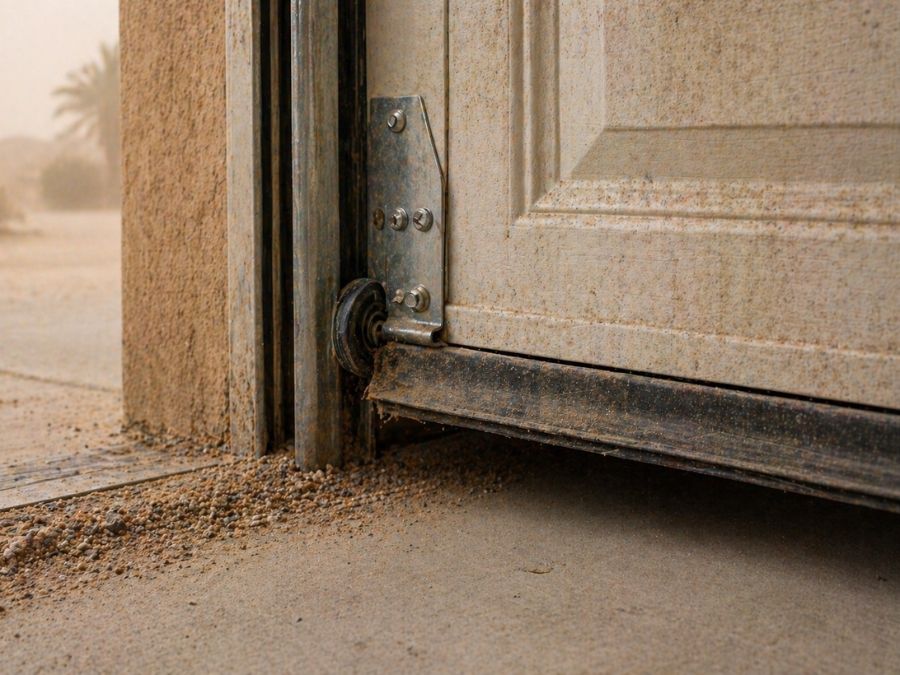
Haboobs can push fine dust into garages and around moving garage door parts. Dust can collect near rollers, hinges, tracks, and seals, making the door sound rough or move less smoothly.
If the door was quiet before the storm and started grinding soon afterward, dust is a reasonable place to start checking. It may not be the only cause, especially if the sound stays after visible debris is removed.
Clean the Tracks Before Adding Lubricant
Start with cleaning, not lubricant. Remove loose dust and debris from the tracks with a soft brush or cloth so the rollers have a clear path.
The tracks themselves should stay clean rather than being coated with grease. If another garage door part needs lubrication, use a product made for garage door hardware and follow the product or manufacturer instructions.
Avoid spraying lubricant over dusty parts just because the door is noisy. Cleaning first makes it easier to tell whether the sound is coming from debris or another problem.
The Storm May Reveal a Worn Part
A haboob may make an existing problem easier to hear. A worn roller can sound rough, a loose hinge may make noise, or a track problem may cause scraping.
Watch for differences between the moving parts. If one roller shakes or drags while the others move smoothly, that area deserves more attention. Grinding that happens at the same point during every cycle can also point to a local hardware or track issue.
If the sound continues after loose dust is removed, worn or poorly moving hardware may also be involved.
Is the Grinding Coming From the Door or the Opener?
Listen to whether the noise moves with the door or stays near the opener.
If the grinding follows the door along the tracks, check the rollers, hinges, and track area first. If the sound remains near the opener motor or rail through most of the cycle, the opener may be involved.
Also notice whether the opener sounds more strained than usual. A door that is harder to move can make the opener work harder, so a louder motor does not always mean the opener itself is the original problem.
What Can You Safely Check?
Start with what you can see and hear. Look for loose dirt, leaves, or debris around the tracks and visible moving parts. Watch whether the rollers move smoothly and whether the door stays even as it opens and closes.
Pay attention to patterns. If one roller shakes, the door scrapes at one height, or the noise always begins at the same point, make a note of it. Those details can help narrow down the problem.
Do not remove rollers, loosen tracks, or adjust springs and cables yourself. These parts can be under high tension and can be dangerous to work on.
What to Check After the Next Phoenix Dust Storm
After a major haboob, clear loose dirt and debris from around the garage door before opening and closing it repeatedly. Check the track area and the bottom of the door for visible buildup.
Look at the seals around the door too. Cracked, loose, or missing seals can leave gaps that allow more windblown dust into the garage.
Routine maintenance can also help catch worn rollers, loose hinges, damaged seals, and movement problems before another storm makes them easier to notice.
How Gecko Garage Doors Can Narrow Down the Problem
If the grinding continues after loose dust is cleared, the next step is to find out exactly where the noise or resistance is coming from.
Gecko Garage Doors can check whether the grinding follows a roller, starts near a hinge or section of track, or stays near the opener motor or rail. The door can also be watched through a full cycle for scraping, shaking, uneven travel, or changes in the opener sound.
This helps narrow the issue before deciding whether the door needs cleaning, adjustment, a worn part replaced, or opener service.
Gecko Garage Doors has served the Phoenix Valley since 1994 and is a licensed, bonded, and insured Arizona contractor, ROC #121561. The company is also a LiftMaster Authorized Dealer.
Still Hearing Grinding After a Phoenix Haboob?
If the grinding keeps coming back after loose debris is cleared, schedule service with Gecko Garage Doors.
Have the door checked if it starts scraping, shaking, moving unevenly, or making the opener sound more strained than usual. Finding the source first can help determine what actually needs attention.