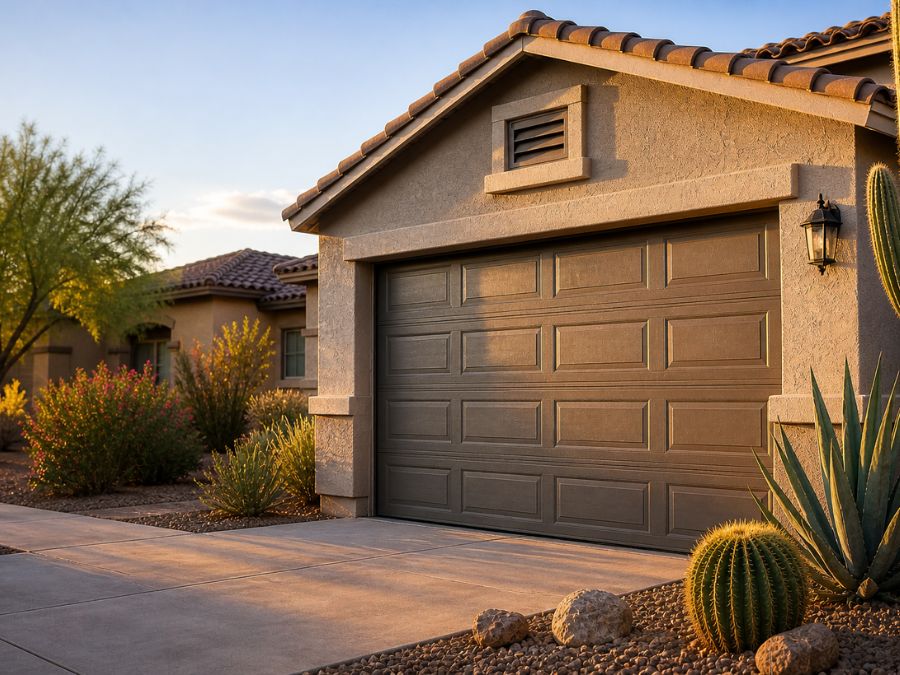
Why Is My Garage Door So Noisy In Gilbert, AZ Heat?
Garage doors in Gilbert often become noisy due to heat drying out lubrication, expanding metal parts, and increasing friction in the system. Dust buildup and worn components can make the problem worse over time. In most cases, the noise is a sign that maintenance or adjustment is needed.
Why Heat Makes Noise Worse in Gilbert
Gilbert summers create extreme conditions for garage door systems. Temperatures inside a garage can easily climb well above 110°F, especially in the afternoon. That kind of heat affects how every moving part behaves.
Metal components expand as temperatures rise, which changes alignment slightly. Even small shifts can create rubbing or vibration during operation. That’s why a door that sounded fine in cooler months suddenly becomes loud in summer.
The heat doesn’t cause the problem by itself. It exposes and amplifies issues that were already starting to develop.
The Most Common Cause: Dry or Worn Lubrication
Lubrication is the first thing heat works against. In Gilbert’s dry climate, lubricants break down faster and lose their effectiveness. Once that happens, metal parts start rubbing directly against each other.
That’s when you hear squeaking, grinding, or rattling. The noise is a clear sign that friction is increasing. Over time, this leads to faster wear on hinges, rollers, and springs.
Regular lubrication is one of the simplest ways to prevent this. In this climate, it needs to be done more often than in cooler regions.
Dust and Debris Add to the Problem
Dust is a constant factor in Gilbert, and it doesn’t stay on the surface. Fine particles settle into tracks, rollers, and joints where the door moves. That buildup creates resistance and noise.
When dust mixes with old lubricant, it can form a gritty layer. Instead of reducing friction, it makes movement rougher. That’s when the door starts sounding louder and less smooth.
Cleaning the system is just as important as lubricating it. Without that step, noise will keep coming back.
Worn Rollers and Hardware
Rollers take a lot of stress over time, especially in high heat. Plastic rollers tend to wear out faster and become noisy as they degrade. Even steel rollers can start to rattle if they lose lubrication or develop wear.
Hinges and brackets can also loosen slightly over time. That creates vibration when the door moves, which adds to the overall noise. These are small changes that build up gradually.
Replacing worn components can make a noticeable difference. It’s often one of the quickest ways to quiet a noisy door.
The Role of the Opener
Sometimes the noise isn’t coming from the door itself. The opener can contribute to the problem, especially if it’s an older chain-drive system. Chain drives naturally create more vibration than belt-drive models.
Heat can also affect how the opener motor runs. Higher temperatures increase strain and can make the system sound louder than usual. This is more noticeable in garages without insulation.
If the noise feels more like vibration than grinding, the opener may be part of the issue. That’s something worth checking before focusing only on the door.
Why Insulation and Door Type Matter
Not all garage doors handle heat the same way. Insulated doors tend to operate more quietly because they absorb vibration better. They also reduce temperature swings inside the garage.
Thinner, non-insulated doors can flex more under heat. That movement can create additional noise during operation. It’s a small difference that becomes noticeable over time.
In Gilbert, insulation isn’t just about temperature. It also plays a role in how quietly the system runs.
When Noise Signals a Bigger Problem
Some noise is normal, but certain sounds shouldn’t be ignored. Loud grinding, popping, or sudden changes in sound can indicate deeper issues. These may involve springs, tracks, or alignment problems.
If the door feels uneven or struggles to move, the noise is likely tied to a larger issue. Continuing to use the system in that condition can cause further damage. That’s when a closer inspection becomes important.
Catching these problems early helps avoid more expensive repairs. Noise is often the first warning sign.
How Often You Should Maintain It in Gilbert
In a climate like Gilbert’s, maintenance needs to happen more frequently. Lubricating every three to four months is a good baseline. Cleaning the tracks and checking components should be part of that routine.
This schedule helps keep friction low and prevents buildup. It also gives you a chance to catch wear before it becomes a bigger issue. Staying consistent makes a noticeable difference.
Skipping maintenance is what usually leads to noisy systems. A little upkeep goes a long way here.
What This Means for Your Garage Door
If your garage door is getting louder in the heat, it’s not something to ignore. The system is telling you that friction or wear is increasing. Addressing it early keeps everything running smoothly.
Most of the time, the fix is straightforward. Lubrication, cleaning, or replacing a few parts can solve the problem. You don’t always need a full repair to make a big improvement.
In Gilbert, heat is always going to be a factor. The goal is to manage its effects so your garage door stays quiet and reliable.