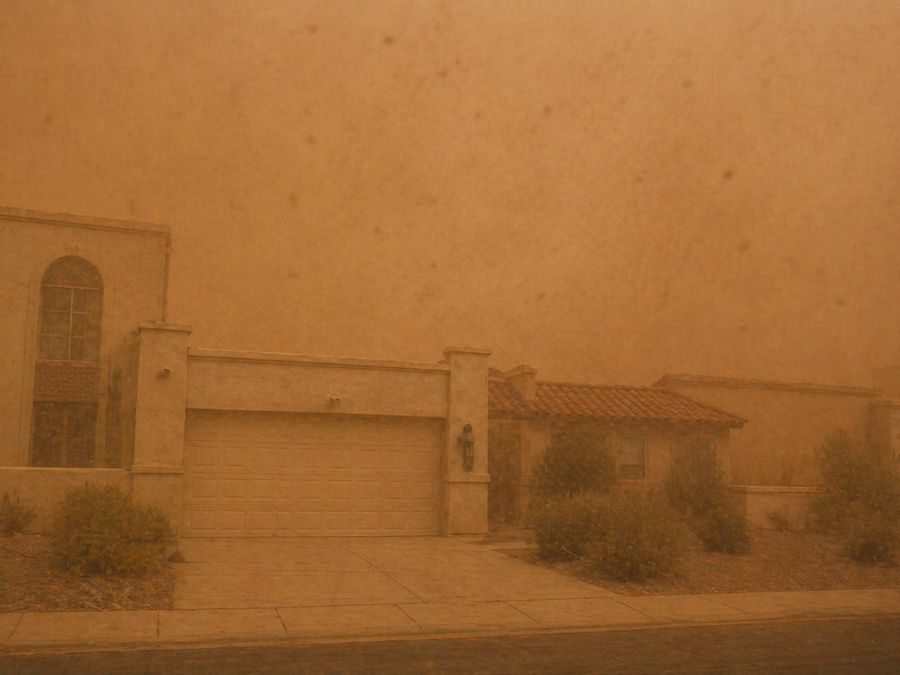
Does Homeowners Insurance Cover Garage Door Damage From a Haboob in Phoenix?
Quick Answer:
Yes, homeowners’ insurance in Phoenix typically covers garage door damage from a haboob if it is classified as windstorm damage, which is a covered peril under most policies. However, approval is not guaranteed. Adjusters look for sudden and accidental failure and will closely inspect whether the door was structurally sound before the storm. If the door was already weakened by Phoenix heat, lacked a proper wind load rating, or showed signs of wear and tear, the claim may be denied. Pro tip: if your repair cost is lower than your deductible, it may not be worth filing a claim.
What a Haboob Actually Does to a Garage Door
In Phoenix, haboobs are not just dust storms—they’re high-impact wind events that can cause immediate and sometimes severe structural damage.
When we’re out inspecting homes after a monsoon storm, the damage we see is rarely superficial. These storms bring intense wind pressure, airborne debris, and rapid pressure changes that hit the garage door all at once. Unlike gradual wear, this type of stress happens suddenly, which is why it often qualifies under insurance coverage when properly documented.
A garage door is one of the largest exposed surfaces on a home, and it acts almost like a sail when strong winds hit it. If the door is front-facing or spans a wide opening, it takes on even more force. That’s why the damage we typically see includes bent panels, doors pushed off track, and hardware failure that prevents the system from operating at all.
The Wind Pressure and “Pressure Differential” Problem
One of the biggest causes of garage door failure during a haboob isn’t debris—it’s pressure, and specifically the difference in pressure between the outside and inside of the garage.
When high winds hit the exterior of the door, they create a strong inward force. At the same time, if air is forced into the garage through small openings, a side door, or even a broken window, internal pressure begins to build. This creates a push from the inside while the storm is pushing from the outside.
That pressure differential is what causes doors to flex, bow, or fail. In some cases, the door doesn’t just collapse inward—it can be forced outward due to the buildup of internal pressure. This is a key detail that insurance adjusters look for when determining whether the failure was caused by the storm or by an existing weakness in the system.
When Insurance Typically Covers the Damage
Most homeowners’ insurance policies in Arizona include windstorm coverage, and haboobs fall squarely into that category.
If the damage is sudden, visible, and directly tied to the storm event, there’s a strong likelihood that the claim will be approved. This includes cases where wind pressure buckles the door or where debris impacts it during the storm.
From what we see in the field, the strongest claims are the ones that clearly show the door was functioning properly before the storm and failed during that specific event. Insurance companies are looking for a direct cause-and-effect relationship, and the more clearly that can be established, the better the outcome.
When Coverage Gets Denied
This is where most homeowners run into frustration.
Insurance companies don’t just evaluate what failed—they evaluate why it failed. If the adjuster determines that the damage is tied to a pre-existing condition rather than the storm itself, the claim is often denied.
In Phoenix, we commonly see this tied to long-term wear from heat exposure, aging panels, or hardware that was already close to failure. The storm may have been the moment the door gave out, but if the system was already compromised, insurance companies will often classify it as wear and tear instead of storm damage.
If an adjuster sees wear before storm damage, the claim is usually denied. That single distinction is what separates approved claims from denied ones.
The “Wind Load” Factor in Modern Phoenix Codes
This is one of the most overlooked factors in insurance claims, but it plays a major role in how damage is evaluated.
Many newer homes in Phoenix are built with garage doors that meet specific wind load ratings, often designed to withstand wind speeds of 90 miles per hour or more. These ratings are part of the structural requirements for the home and are meant to ensure the door can handle the type of storms common in the area.
If a homeowner replaces a wind-rated door with a standard, non-reinforced model, that can create a problem during a claim. Insurance companies may view that as a failure to maintain the home to code, especially if the replacement door doesn’t meet the original wind resistance requirements.
We always recommend checking the wind load rating sticker on the inside edge of your door panels. It’s a simple step that can help confirm whether your door is built to handle Phoenix conditions before monsoon season hits.
The Reality Check Most Homeowners Run Into
We get a lot of calls after haboobs where the garage door has failed, and the homeowner assumes the damage will be covered.
But after the adjuster completes their inspection, the claim gets denied because the door shows signs of prior wear or doesn’t meet structural expectations. At that point, the situation changes quickly. What seemed like a covered loss becomes a full-out-of-pocket repair.
This is one of the most common scenarios we see after monsoon season, and it’s often preventable with the right preparation and understanding of how claims are evaluated.
The Deductible vs. Repair Cost Problem
Before filing a claim, it’s important to take a step back and look at the numbers.
In many cases, garage door damage—such as a bent panel or minor structural issue—can fall into a repair range that’s close to or even below a typical homeowner’s deductible. If your deductible is higher than the repair cost, the insurance payout may be zero.
Filing a claim in that situation can still affect your insurance history and potentially lead to higher premiums, even if no money is paid out. That’s why it’s important to compare the estimated repair cost with your deductible before moving forward with a claim.
The “Wide Door” Risk in Phoenix Homes
Many homes in Phoenix feature wide, front-facing garage doors, especially in suburban developments.
These larger doors take on significantly more wind load during a haboob. The increased surface area means more pressure builds across the door, which increases the likelihood of failure during a strong storm.
We’ve seen cases where a single-car door on the same home holds up without issue, while a double-wide door fails under the exact same conditions. It’s not always about the severity of the storm—it’s about how the door distributes and withstands that pressure.
What to Do Immediately After Storm Damage
If your garage door is damaged after a haboob, the steps you take immediately afterward can directly affect the outcome of your insurance claim.
Start by documenting everything as soon as it’s safe to do so. Take clear photos of the damage from multiple angles, including any visible impact points, misalignment, or structural changes. This early documentation helps establish a timeline and strengthens your claim.
There’s a critical window here—what we often refer to as the 24-hour window. Adjusters place more trust in damage that is documented immediately after the storm. If you wait several days and another storm passes through, it becomes harder to prove what caused the damage, and that uncertainty can work against you.
Avoid operating the door if it’s compromised. Forcing it open or closed can worsen the damage and make it more difficult to determine the original cause.
The Role of Maintenance in Insurance Claims
Maintenance plays a much bigger role in insurance claims than most homeowners expect.
Even when damage occurs during a storm, adjusters will evaluate the condition of the system beforehand. If the door shows signs of neglect or long-term wear, that can weaken the claim.
We’ve seen this happen in situations where rollers are worn out, panels are weakened from years of heat exposure, or the door is already out of alignment. In those cases, the storm becomes the tipping point, not the cause.
Keeping the door in good working condition doesn’t just improve performance—it protects your ability to have storm damage recognized as a covered event.
How to Reduce Your Risk Before the Next Haboob
You can’t prevent a haboob, but you can reduce how much damage your garage door takes when one hits.
The most effective approach is making sure the system is structurally prepared. Reinforced doors with proper wind load ratings handle pressure better, and regular maintenance ensures that all components are working together as they should.
Checking alignment, tightening hardware, and making sure the door is operating smoothly can all reduce the chances of failure during extreme conditions.
Preparing the system before the monsoon season is one of the most practical ways to protect both your home and your ability to file a successful insurance claim.