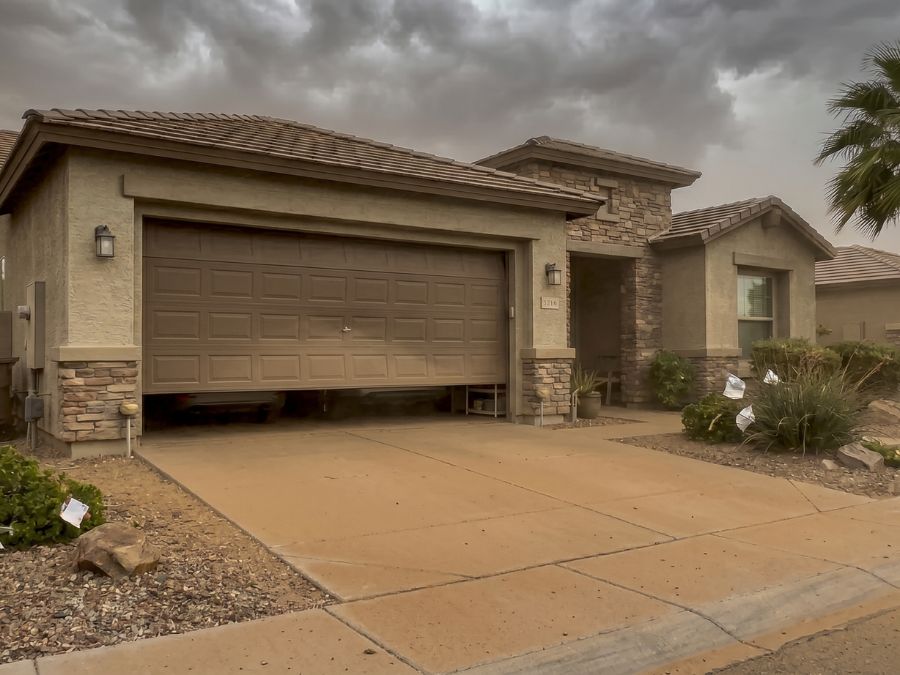
Why Does My Garage Door Grind and Shake After a Haboob Dust Storm in Glendale, AZ?
Quick Answer:
If your garage door grinds and shakes after a haboob, fine dust has likely worked into the rollers, tracks, and moving parts, creating abrasive friction. In Glendale, this dust behaves like sandpaper inside the system, causing noise, vibration, and rough movement until it is properly cleaned and lubricated.
Haboob Recovery Checklist (Start Here)
If your garage door just started grinding after a dust storm, the goal is to stabilize the system quickly before that dust causes deeper wear. These steps focus on removing contamination instead of masking it.
Start by wiping the inside of both vertical tracks using a clean microfiber cloth. This removes loose dust sitting on the surface before it gets pulled further into the system during operation. Pay attention to the lower sections where buildup tends to collect first.
Next, use a shop vacuum around the roller stems and hinges. This is important because blowing air into the system will push dust deeper into bearings and joints, making the problem worse. Vacuuming pulls debris out instead of redistributing it.
Then check for any black sludge on rollers or hinges. This is a mixture of old grease and dust, and it is one of the biggest causes of grinding. If you see it, wipe it off completely rather than adding more lubricant on top.
Finally, apply a dry silicone lubricant to hinges and roller bearings only. Avoid spraying the tracks, since lubrication there can attract more dust and reduce traction where the rollers need controlled movement.
Why Haboobs Hit Garage Doors So Hard in Glendale
In Glendale, haboobs function more like a system-wide contamination event than a simple dust storm. When these storms move through the West Valley, they carry extremely fine silt that behaves very differently from normal dirt or debris.
This dust often originates from open desert areas, construction zones, and dry riverbeds like the Agua Fria and New River. These regions act as large-scale dust sources, and when storm winds push through, that material gets lifted and carried directly into residential neighborhoods.
Unlike heavier dirt particles, this fine silt can stay suspended in the air longer and penetrate deeper into mechanical systems. It does not just settle on visible surfaces—it works its way into roller housings, track edges, hinge joints, and any area where there is even a small gap.
If your garage door was operating smoothly before the storm and immediately feels rough afterward, that is a clear sign that this fine dust has entered the system and disrupted normal movement.
What That Grinding and Shaking Actually Feels Like
When homeowners describe grinding and shaking, they are often experiencing a combination of friction and uneven resistance throughout the system. These symptoms tend to follow very recognizable patterns once you know what to listen for.
The grinding sound usually resembles metal dragging across sand or a low, gritty scraping noise that was not present before the storm. It is not a sharp mechanical failure sound, but rather a rough, continuous resistance noise.
The shaking often feels like short bursts of vibration rather than a smooth, consistent movement. The door may appear to hesitate slightly as it travels, especially when certain rollers hit areas of heavier dust buildup.
In many cases, the issue becomes more noticeable the longer the door runs. The first section of movement may feel relatively normal, but the grinding intensifies as more contaminated components cycle through the tracks. This progression is a strong indicator that dust is distributed throughout the system rather than isolated to a single point.
A Fast Way to Pinpoint Where the Problem Is Coming From
You can narrow down the source of the problem quickly by paying close attention to how the door behaves during operation. Small differences in movement often reveal exactly where the issue is located.
If the grinding occurs throughout the entire movement, it usually means dust contamination has spread across multiple rollers and both tracks. This indicates a system-wide cleaning is needed rather than a targeted fix.
If the noise or vibration is stronger on one side, it often points to uneven dust loading. This can happen when storm winds push debris more heavily into one side of the garage opening.
If the door jerks or hesitates at a specific point, that typically means there is concentrated buildup in that section of the track or a single roller that has become compromised.
A useful diagnostic step is to run the door halfway, stop it, and listen carefully. If you still hear a gritty or creaking sound while the door is stationary, that suggests the issue is within the rollers or hinges rather than the track surface itself.
Why Glendale Homes Are More Susceptible
Garage doors in Glendale are exposed to a unique combination of environmental conditions that increase the likelihood of dust-related issues. These factors work together to make haboob impact more severe than in many other regions.
The West Valley regularly experiences fine dust movement due to desert terrain, ongoing construction, and dry riverbeds such as the Agua Fria and New River. These areas act as dust reservoirs that feed into storm systems, increasing the intensity of haboobs as they move through residential zones.
In North Glendale communities like Arrowhead Ranch, Arrowhead Lakes, and Stetson Valley, garage designs often include wide, front-facing openings with minimal shade or protection. This layout allows dust to enter easily and settle deeper into the system.
In older parts of Glendale, especially south of Northern Avenue, garages may have worn seals, small structural gaps, or aging materials. These conditions make it easier for dust to infiltrate and accumulate after each storm.
The Biggest Mistake Homeowners Make After a Dust Storm
After a haboob, many homeowners instinctively try to operate the door repeatedly, hoping the noise will go away on its own. In reality, this approach accelerates wear and makes the situation worse.
Each time the door cycles, dust particles are forced deeper into rollers, hinges, and moving joints. What starts as a light layer of contamination quickly becomes embedded friction that is much harder to remove.
Another common mistake is applying grease immediately. While lubrication is important, using the wrong type creates a bigger problem. Grease captures dust and turns it into an abrasive compound that increases resistance instead of reducing it.
Understanding what not to do is just as important as knowing the correct steps to take.
Glendale Pro Tip: Dust, Wind, and Why Grease Backfires
In Glendale’s environment, lubrication strategy needs to account for constant dust exposure. Many standard maintenance habits that work in other climates do not translate well here.
Grease tends to hold onto dust particles and create buildup over time. This buildup increases friction and causes components to wear down faster, especially in high-cycle systems.
A dry silicone-based lubricant avoids this problem by reducing friction without attracting debris. It creates a cleaner operating environment and helps maintain smoother movement even after repeated exposure to dust storms.
What To Do Right After a Haboob
The priority after a dust storm is to remove contamination before it becomes embedded in the system. Acting early makes a significant difference in how well the door recovers.
Begin by clearing loose debris from both tracks using a dry cloth. Focus on areas where dust appears to have settled more heavily, particularly near the bottom of the tracks.
Next, clean around rollers and hinges carefully. The goal is to remove buildup without pushing it deeper into the system. Avoid using water, as moisture can combine with dust and create additional complications.
Once the system is clean, apply a dry silicone lubricant to the moving components. This helps restore smooth motion and prevents further friction.
After completing these steps, run the door several times and observe how it performs. In most cases, you will notice immediate improvement if dust was the primary issue.
A Quick Test You Can Try Immediately
If you want to confirm the cause without fully cleaning the system, you can isolate the issue with a simple test. This helps you understand where the problem is concentrated before taking further action.
Clean one track thoroughly while leaving the other side untouched. Then operate the door and listen closely for changes in sound and movement.
If the grinding shifts to the untreated side or becomes more noticeable there, you have confirmed uneven dust buildup as the source of the problem. This method gives you a clear answer without needing to disassemble anything.
The Luke AFB Vibration Factor
In areas near Luke Air Force Base, garage door systems are exposed to low-level vibration from regular jet activity. While this vibration is not usually noticeable day to day, it can affect hardware over time.
Track brackets, mounting bolts, and other structural components may gradually loosen due to repeated vibration. This does not cause immediate failure, but it can create slight alignment shifts that make the system more sensitive to dust and friction.
Checking hardware stability every six months helps maintain proper alignment and prevents small issues from developing into larger problems.
When the Dust Is Revealing a Bigger Issue
In some cases, the haboob is not the root cause of the problem. Instead, it exposes existing wear that was not obvious before.
If grinding continues after cleaning, or if the door feels uneven or unstable, there may be worn rollers, bent tracks, or aging components involved. Dust accelerates wear, but it often reveals weaknesses that were already present.
In Glendale, frequent use and environmental exposure contribute to faster wear cycles. Addressing these issues early helps prevent more extensive repairs later.
What Actually Fixes It Long Term
Long-term performance in Glendale depends on consistent maintenance and choosing components that can handle dust exposure.
Routine cleaning after storms prevents buildup from accumulating over time. Using the correct lubricant keeps moving parts operating smoothly without attracting additional debris.
Upgrading to sealed-bearing rollers is one of the most effective improvements for homes in dust-prone areas. These rollers are designed to resist contamination and maintain consistent performance under harsh conditions.
If components have already worn down, replacing them is often necessary to fully restore smooth operation.
What This Means for Your Garage Door Moving Forward
If your garage door starts grinding and shaking after a haboob, it is a clear signal that the system has been affected by environmental conditions. In Glendale, this is not unusual, but it does require attention to prevent long-term damage.
The key is to respond quickly by cleaning and maintaining the system before dust becomes embedded and causes additional wear.
With the right approach, most of these issues can be resolved without major repairs. Understanding how Glendale’s environment affects your garage door allows you to keep it running smoothly even after repeated dust storms.
If you are starting to explore your options, a professional inspection can help determine whether the issue is simple contamination or if any components need adjustment or replacement.