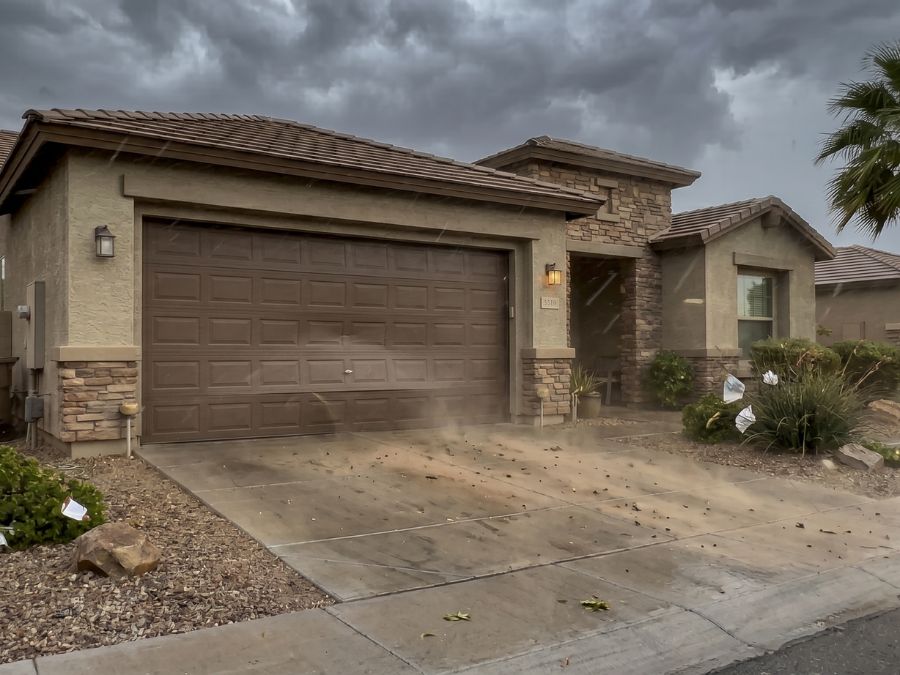
How Do I Protect My Garage Door From Monsoon Wind Damage in the West Valley?
Quick Answer:
To protect your garage door from monsoon wind damage in Glendale and the West Valley, you need to reinforce the door structure, secure all hardware, and make sure the system is properly aligned and balanced. Microbursts create sudden pressure against the door, so prevention comes down to strength, stability, and preparing the system before storms hit.
Monsoon Wind Risk Check (2 Minute Test)
Before storm season ramps up, this quick check tells you how vulnerable your door is.
If the door flexes easily when you press the center, especially with light pressure, it is at higher risk of panel failure during strong winds. A properly reinforced door should feel firm with only minimal movement.
If there is no horizontal reinforcement bar across the top panel, the door has less structural support where wind pressure hits hardest. This is one of the most common weak points in standard doors. If the side tracks move when you press on them, even slightly, that means the mounting hardware may be loose. Wind pressure will amplify that weakness quickly.
If the door feels heavy or uneven when operated manually, the system is already under strain. That reduces its ability to handle sudden pressure from a storm. If you check off more than one of these, your door is more vulnerable than most homeowners realize.
Why Monsoon Winds Hit Garage Doors So Hard in Glendale
In Glendale, monsoon storms are not steady wind events. They are sudden, high-force pressure events known as microbursts. That difference matters because your garage door is not designed to handle that type of impact.
A typical windy day creates gradual pressure that builds and releases over time. A microburst is different. It hits fast, pushes hard, and applies force across the entire surface of the door almost instantly.
In areas near the Agua Fria corridor, open desert zones, or neighborhoods off the Loop 101, wind has space to build speed before reaching homes. By the time it hits your garage, it is not just wind—it is a pressure wall.
That sudden force is what causes garage doors to flex, rattle, or fail without much warning.
What Wind Pressure Actually Does to Your Door
Garage doors are designed to move vertically, not resist horizontal force. When wind hits the face of the door, it pushes inward across the entire surface at once.
You may hear a loud popping or banging sound during a storm. That is often the panels flexing under pressure, sometimes referred to as “oil-canning.” The door may look like it is slightly breathing inward and outward as gusts hit.
If the door structure is weak or unsupported, that pressure can cause panels to bow or hinges to strain. In more severe cases, the door can jump the track or collapse inward.
The real danger starts if the door gives way completely. Once wind enters the garage, it creates internal pressure that pushes upward into the home. That is when damage can extend beyond the door to the ceiling, walls, or even roof structure.
What It Feels Like During a Storm
Most homeowners who have experienced this describe a very similar sequence.
You hear a sudden loud gust, followed by rattling or shaking coming from the garage door. The door may vibrate in short bursts, not a steady movement, as pressure hits in waves.
In some cases, it sounds like something struck the door from the outside. Other times, the panels visibly flex for a moment and then return to position.
Even if the door does not fail, those repeated pressure hits weaken the system over time. What holds during one storm may not hold during the next if nothing is reinforced.
The Homes Most at Risk in the West Valley
Not every garage door faces the same level of exposure. Certain home layouts and locations in Glendale are more vulnerable during monsoon season.
Wide double-car garage doors are at higher risk because they present a larger surface area for wind to push against. The wider the door, the more force it has to absorb.
Homes in newer developments like Stetson Valley or Sierra Verde often have fewer mature trees or structures to break wind. That leaves garage doors more exposed to direct gusts.
Properties near open land, desert edges, or dry riverbeds like the Agua Fria and New River corridors experience stronger wind flow. These natural pathways allow storms to carry more force into neighborhoods.
Older homes, especially south of Northern Avenue, may have doors that were not built to modern wind-load standards. Aging hardware and materials further increase vulnerability.
The Push Test That Actually Tells You Something
The push test is useful, but only if you understand what you are feeling.
With the door closed, press firmly but not aggressively at the center. A slight amount of flex is normal, but the door should still feel structurally solid.
If the door bows easily with minimal pressure or feels unstable, that indicates a lack of reinforcement. That same movement will be amplified significantly during a microburst.
If one section feels weaker than the rest, that may point to a missing or failing support strut. That is often where wind damage begins.
This test gives you a baseline for how your door will respond under pressure.
What NOT To Do Before or During a Storm
There are a few common mistakes that increase risk without homeowners realizing it.
Do not leave the garage door partially open. Even a small opening allows pressure to build inside the garage and weakens the system’s ability to resist wind.
Do not assume a newer door is automatically strong enough. Many standard doors are not wind-rated and can still flex significantly under pressure.
Do not ignore loose hardware or minor movement in the tracks. Small weaknesses become major failure points during storms.
Do not open the garage door during high winds to check conditions outside. This removes a key barrier and allows pressure to enter the garage rapidly.
A Simple Step You Can Take Before a Storm Hits
If a monsoon storm is expected, one of the simplest protective steps is to make sure the garage door is fully closed and the system is not under strain.
Parking a vehicle inside the garage can also help stabilize pressure slightly by reducing the amount of open space behind the door. While this is not a structural fix, it can help limit pressure changes during a storm.
If you already know your door has some flex or weakness, avoiding use during high wind periods reduces stress on the system when it matters most.
Glendale Pro Tip: Reinforcement Is the Real Protection
In the West Valley, reinforcement is what separates doors that hold from doors that fail.
A reinforcement strut across the top panel helps distribute wind pressure across the door instead of concentrating it in one area. This is one of the most effective upgrades for standard garage doors.
For homes in high-exposure areas, upgrading to a wind-rated door provides a higher level of protection. These doors are built with stronger materials and additional support designed specifically for pressure resistance.
Even small reinforcement upgrades can significantly improve how your door performs during monsoon season.
The Luke AFB Factor and Hardware Stability
In parts of Glendale near Luke Air Force Base, vibration from regular jet activity can gradually loosen hardware over time.
Track brackets, mounting bolts, and structural connections may shift slightly without being obvious. This reduces the overall rigidity of the system.
Before monsoon season, it is worth checking that all hardware is secure. Tightening loose components helps restore structural integrity and ensures the door can handle additional stress during storms.
What Actually Protects Your Door Long Term
Long-term protection comes from strengthening the system as a whole, not just addressing one component.
Reinforced panels, secure tracks, and properly tightened hardware all work together to resist pressure. A balanced door ensures that force is distributed evenly across the system.
Upgrading vulnerable components, especially in high-exposure areas, reduces the risk of failure during future storms.
Routine inspections before and after monsoon season help catch small issues early and keep the system performing reliably.
What This Means for Your Home Moving Forward
Your garage door is one of the largest and most exposed surfaces on your home. In Glendale and the West Valley, that makes it a critical point of vulnerability during monsoon storms.
Preparing your door ahead of time helps prevent damage and reduces the risk of larger structural issues. Small improvements in reinforcement and maintenance can make a significant difference when high winds hit.
Understanding how your door responds to pressure allows you to take control of the situation rather than reacting after damage occurs.
Frequently Asked Questions
Can monsoon winds really damage a garage door?
Yes, microbursts can create enough pressure to bend panels, loosen hardware, or cause the door to fail if it is not properly reinforced.
Can my garage door collapse during a monsoon storm?
It is possible, especially if the door is wide, unreinforced, or already weakened. Once structural integrity is compromised, failure can happen quickly under pressure.
What is a wind-rated garage door?
A wind-rated garage door is built with reinforced materials and structural support designed to withstand higher wind pressures without bending or failing.
Should I brace my garage door during a storm?
Temporary bracing can help in some situations, but permanent reinforcement or upgrading to a wind-rated door is a more reliable long-term solution.
Should I unplug my garage door opener during a storm?
It is not required in most cases, but avoiding operation during high winds is important. Keeping the door closed and undisturbed is the safer approach.
Is it safe to open my garage door during a monsoon storm?
No, opening the door during high winds allows pressure to enter the garage and increases the risk of structural damage.