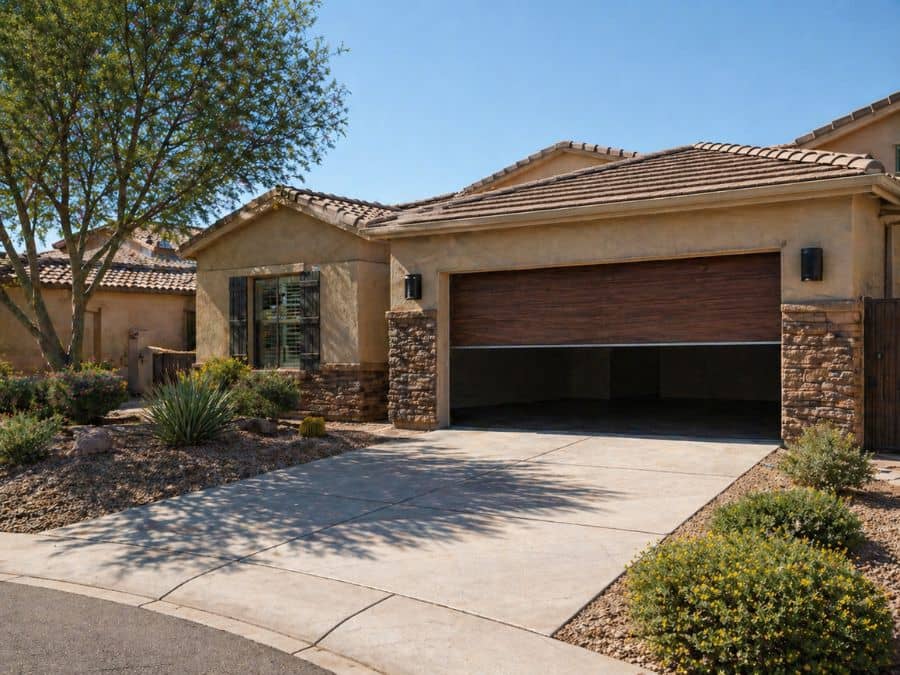
Why Won’t My Garage Door Close in the Afternoon Sun in Gilbert AZ?
Quick Answer:
If your garage door will not close in the afternoon, your garage is likely dealing with sun ghosting. This happens when intense Gilbert sunlight overwhelms the infrared safety sensors and tricks the opener into thinking something is blocking the door. The first steps are to clean the sensor lenses with a cotton swab, re-align the brackets because even a small shift can make glare worse, and check whether the receiving sensor is sitting on the side of the garage that gets direct afternoon sun.
Why This Happens So Often in Gilbert
In Gilbert, this problem tends to show up during the hottest, brightest part of the day. The garage door closes normally in the morning, works fine at night, but refuses to close in the afternoon when the sun is hitting the front of the home. That timing is the biggest clue.
Most modern garage doors use photo-eye safety sensors near the bottom of the tracks. One sensor sends an invisible beam to the other. If that beam is blocked, broken, or disrupted, the opener will not allow the door to close normally. This is an important safety feature, but in direct Arizona sun, the receiving sensor can sometimes become overwhelmed.
Gilbert homes are especially prone to this because of the wide streets, open driveways, strong afternoon exposure, and frequent west-facing garage layouts found in many neighborhoods. In areas like Power Ranch, Morrison Ranch, Spectrum, and Cooley Station, the garage often faces a long driveway or open street with very little shade during peak sunlight hours.
What Sun Ghosting Means
Sun ghosting is the common term for sunlight interfering with the garage door safety sensor beam. The sensors are supposed to detect whether something is blocking the door opening. When intense sunlight hits the receiving eye at the wrong angle, the sensor may behave as if the beam is blocked, even when nothing is there.
The result is usually frustrating but predictable. You press the wall button or remote, the door starts to close, then reverses back up. The opener lights may flash, and the system may refuse to close unless you hold the wall button down. In many cases, the door will work again once the sun shifts or the driveway falls into shade.
This does not always mean the opener is failing. It usually means the sensors are either being blinded by direct sunlight or are already slightly out of alignment. The sun simply exposes the weakness at the worst possible time of day.
The Receiving Eye vs. The Sending Eye
Most homeowners do not realize garage door safety sensors are not identical. One sensor is the sending eye, which sends the infrared beam across the opening. The other is the receiving eye, which reads that beam and confirms the path is clear.
On many systems, the sending eye has an amber or yellow indicator light, while the receiving eye has a green indicator light. The receiving eye is usually the one that gets blinded by direct afternoon sun. If the green light is on the side of the garage opening that catches direct sun, the opener may think the beam is blocked even when the doorway is empty.
This is why some Gilbert homes have the same problem every afternoon at the same time. In neighborhoods like Spectrum, Morrison Ranch, Power Ranch, and parts of Cooley Station, the sun angle can hit the receiver directly for a short but frustrating window of the day. In some cases, swapping the physical locations of the sending and receiving sensors can move the receiver to the shaded side and create a more permanent fix.
The Most Common Signs of Sun Sensor Interference
The most obvious sign is timing. If the door closes fine in the morning and evening but refuses to close in the afternoon, sunlight should be one of the first things to suspect. A true mechanical failure usually does not follow the sun across the sky.
Another sign is a door that starts down and immediately reverses. The opener may click, the lights may flash, or the door may move a few inches before going back up. This is the opener responding to a perceived obstruction in the doorway.
You may also notice that one sensor light flickers or turns off when the sun hits it directly. If the light becomes steady when you shade the sensor with your hand, that strongly points to sun ghosting. Dirty lenses, dust buildup, hard water spotting, and loose sensor brackets can make this even worse.
Why Gilbert Afternoon Sun Is So Tough on Sensors
Gilbert’s afternoon sun is intense, especially during late spring, summer, and early fall. West facing garage doors take the hardest hit because the sun is low enough to shine directly into the sensor path. That angle can be more disruptive than overhead midday sun.
The problem can be stronger in neighborhoods with wide streets, open driveways, or minimal shade. In newer areas south and east of Germann Road, many homes have broad driveways and exposed garage elevations. In Morrison Ranch and Agritopia, tree lined streets can help in some spots, but gaps in shade can still create direct sensor glare during certain hours.
Heat also plays a role. Plastic sensor housings, brackets, and wiring are exposed to repeated expansion and contraction. Over time, the sensor may shift slightly out of alignment. When the alignment is already marginal, the afternoon sun can be enough to interrupt the beam.
Sensor Alignment Is Usually Part of the Problem
Sunlight is often blamed for the entire issue, but alignment is usually part of the story. A perfectly aligned, clean, properly mounted sensor is less likely to be affected by glare. A sensor that is slightly crooked, loose, dusty, or vibrating near the track is much more vulnerable.
In Gilbert homes, this can happen from normal daily use. Families often use the garage as the main entrance, which means the door cycles several times a day. Bikes, scooters, soccer gear, storage bins, and outdoor equipment can bump the sensor brackets without anyone noticing.
Once a sensor bracket is nudged out of place, the system may still work most of the time. But when afternoon sun hits the receiving eye, the weakened signal becomes unreliable. Even a small shift can make the receiver more sensitive to glare, especially if the lens is dirty or the garage faces west.
Dust, Irrigation, and Garage Clutter Can Make It Worse
Gilbert has its own version of dust problems. In areas near remaining agricultural land to the south and east, monsoon dust can be thicker and grittier than standard desert dust. That dust can settle on sensor lenses, tracks, and lower hardware, especially after windy afternoons or storm activity.
Irrigation overspray can also leave mineral spots on sensor lenses or nearby hardware. In Gilbert lake communities like Val Vista Lakes or The Islands, reclaimed irrigation water can create hard water spotting on the sensor lens. That mineral film acts almost like a frosted window, scattering the sensor beam and making the system more likely to fail when afternoon glare hits it.
Garage clutter is another common factor. Gilbert families often store bikes, sports equipment, folding chairs, strollers, and yard tools near the door opening. If something is leaning close to the sensor path, even slightly, afternoon glare can turn a borderline issue into a door that refuses to close.
Why Holding the Wall Button Works
Many homeowners discover that if they hold the wall button down, the door will close even when the remote will not work. This can be confusing, but it is built into many opener systems. Holding the wall control may allow the opener to close in a constant pressure mode, depending on the model and safety conditions.
This does not mean the problem is fixed. It only means the opener is being manually overridden in a controlled way. If the sensors are blocked, misaligned, or being blinded by sunlight, the system still needs attention.
Relying on this workaround every afternoon is not a good long term solution. It can be inconvenient, and it also means your safety system is not functioning normally during those hours. The better approach is to correct the sensor alignment, clean the lenses, and reduce direct glare where possible.
What You Can Check First
Start by looking at the sensor lights. Most systems have small LED indicators on both photo eyes. They should usually be steady, not flickering or off. If one light changes when the sun hits it, sunlight interference is likely.
Next, clean the sensor lenses carefully with a cotton swab or soft dry cloth. Arizona dust can be abrasive, so avoid grinding the dirt into the lens. A light, controlled cleaning is usually better than harsh cleaners or soaking the sensor.
Then check the brackets. The sensors should face each other directly across the opening and sit at the same height. If one is tilted, loose, or shifted even slightly, the beam may be weaker than it should be. Be careful not to bend brackets aggressively, especially if they are older or brittle from heat exposure.
Simple Ways to Reduce Sun Interference
One practical option is to shade the receiving sensor. Some homeowners use manufacturer approved sensor shields or small sun guards designed for garage door photo eyes. The goal is to block direct sunlight from hitting the lens while still allowing the sensor beam to pass cleanly across the opening.
In some cases, switching the sending and receiving sensors from one side of the door to the other can help. If the sun is hitting the receiver directly from a specific angle, relocating the receiver to the shaded side may reduce or eliminate the problem. This should be done carefully so the wiring, polarity, and alignment remain correct.
Another option is improving shade around the garage opening. Landscaping, driveway orientation, and exterior design all play a role. In Gilbert neighborhoods with open western exposure, even a small amount of shade during the late afternoon can reduce sensor glare.
When It Is Not Just the Sun
If the door refuses to close at all times of day, the issue is probably not sun ghosting. In that case, the problem may be sensor wiring, a failed photo eye, damaged opener logic board, bad wall control, dirty tracks, worn rollers, or a mechanical obstruction.
If the opener lights flash every time you try to close the door, the sensor system is still a likely starting point. But if the opener hums, clicks, or does nothing, the issue may be electrical or mechanical rather than optical. If the door starts down and then reverses only at a certain point in travel, it may be feeling resistance from the tracks, rollers, or spring system.
This distinction matters because replacing the opener will not fix a dirty sensor lens or a crooked bracket. At the same time, shading a sensor will not fix a door that is binding because the tracks are misaligned or the rollers are worn.
Gilbert Homes Where This Problem Is Especially Common
This issue is especially common in west facing garages and homes with exposed afternoon sun. In Power Ranch, Seville, Spectrum, and parts of Cooley Station, many homes have larger garage openings, open driveways, and wide street exposure that can leave sensors vulnerable to direct sunlight.
Older homes near the Old Gilbert core, including areas around Guadalupe, Elliot, and Gilbert Road, may have older opener systems with sensors that are more sensitive to alignment issues. Sensor brackets may also be weaker, wiring may be older, and the opener may not handle signal disruption as well as a newer system.
Lake communities like Val Vista Lakes and The Islands can see a slightly different version of the problem. Reflected light, irrigation residue, and mineral buildup can all contribute to sensor trouble. The root issue is still the same: the opener does not trust the safety beam, so it refuses to close.
Why Summer Heat Can Turn a Small Sensor Issue Into a Daily Problem
Gilbert heat affects more than comfort. It changes how garage door components behave. Plastic housings expand, brackets loosen, wiring insulation ages, and dust sticks to lower hardware more easily. The safety sensors sit low to the ground, where they are exposed to heat, dust, pests, and bumps from storage items.
A sensor that is barely aligned in March may start failing every afternoon by July. The sun angle, heat load, and glare intensity all become stronger. By late summer, the problem may feel like the garage door has suddenly become unreliable, even though the weakness was developing slowly.
This is also when homeowners are most likely to depend on the garage door. In Gilbert, families are often coming and going with school activities, sports, errands, and evening plans. A door that refuses to close at the hottest part of the day is more than annoying. It can leave the home unsecured until the issue is resolved.
FAQs
Why does my garage door close at night but not in the afternoon?
That usually points to sunlight interfering with the safety sensors. When the sun shifts away from the sensor path, the beam becomes reliable again and the door closes normally.
Which garage door sensor does the sun affect?
The sun usually affects the receiving sensor, often the one with the green indicator light. If that sensor faces direct afternoon sun, it can get blinded by glare and cause the opener to think the doorway is blocked.
What does it mean when the garage door starts to close and then reverses?
It usually means the opener thinks something is blocking the safety sensor beam or the door is encountering resistance. If it happens mostly in afternoon sun, the sensors are the likely starting point.
Can I cover the garage door sensors to block the sun?
You can shade the receiving sensor with an appropriate sun shield, but you should never block the sensor beam itself. The safety system still needs a clear path across the door opening.
Why do the opener lights flash when the door will not close?
Flashing lights often indicate a safety sensor issue. The sensors may be misaligned, dirty, blocked, or affected by direct sunlight.
Can dust cause the same problem as sunlight?
Yes. Dust on the sensor lenses can weaken the beam and make the system more vulnerable to sunlight interference. Gilbert dust, especially after windy days or monsoon storms, can make this problem worse.
Can irrigation water affect garage door sensors?
Yes. Irrigation overspray can leave mineral spots on the sensor lens. In lake communities like Val Vista Lakes or The Islands, hard water spotting can scatter the beam and make sun ghosting worse.
Is this an opener problem or a sensor problem?
If the door opens normally but refuses to close in bright afternoon sun, the sensors are the most likely issue. If the opener does not respond at all, hums, clicks, or fails at all times of day, the problem may be electrical, mechanical, or related to the opener itself.
Should I replace the sensors or the whole opener?
Not always. Many afternoon closing problems can be solved with cleaning, realignment, shielding, swapping sensor sides, or replacing the photo eyes. Replacing the full opener is usually only considered when the opener is older, failing in multiple ways, or no longer worth repairing.
What This Means for Gilbert Homeowners
If your garage door will not close in the afternoon sun, the problem is usually not random and it is usually not the entire opener failing. In Gilbert, the most common cause is direct sunlight interfering with the receiving safety sensor, especially when the lens is dirty, the bracket is slightly misaligned, or the garage faces west.
The key is to solve the real cause instead of forcing the door every day. If you are starting to explore your options, a professional inspection can help determine whether the issue is sun ghosting, sensor alignment, hard water spotting, damaged wiring, opener trouble, or a mechanical problem with the door itself. Once the sensor system is clean, aligned, and protected from direct glare, the door should close more reliably even during Gilbert’s brightest afternoon hours.