Should I Replace One or Both Garage Door Springs at the Same Time in Surprise, AZ?
Quick Answer:
If your garage door has two springs and one breaks, it is usually best to replace both at the same time because they were likely installed together, lifted the same door through the same number of cycles, and endured the same Surprise heat, dust, vibration, and daily strain. Replacing both springs restores a matched, balanced system, reduces the chance of the second spring failing soon after, and helps protect the opener from working against an uneven load.
Why Replacing Both Springs Usually Makes Sense
When one garage door spring breaks, the first question many homeowners ask is simple: can I replace only the broken spring? On the surface, that sounds reasonable. One spring broke, so it feels natural to repair just that one.
The problem is that garage door springs do not wear out by appearance alone. They wear out by cycles. If both springs were installed on the same day, they have usually lifted the same door the same number of times under the same conditions. When one reaches the end of its life, the other spring is usually close behind.
In Surprise, this decision matters because many homeowners use the garage as the main entrance into the home. In neighborhoods like Marley Park, Surprise Farms, Rancho Gabriela, Greer Ranch, Sierra Montana, Asante, Desert Oasis, Rancho Mercado, and Sun City Grand, the garage door may open and close many times a day for vehicles, golf carts, bikes, tools, school routines, errands, and everyday access.
Why Many Garage Doors Have Two Springs
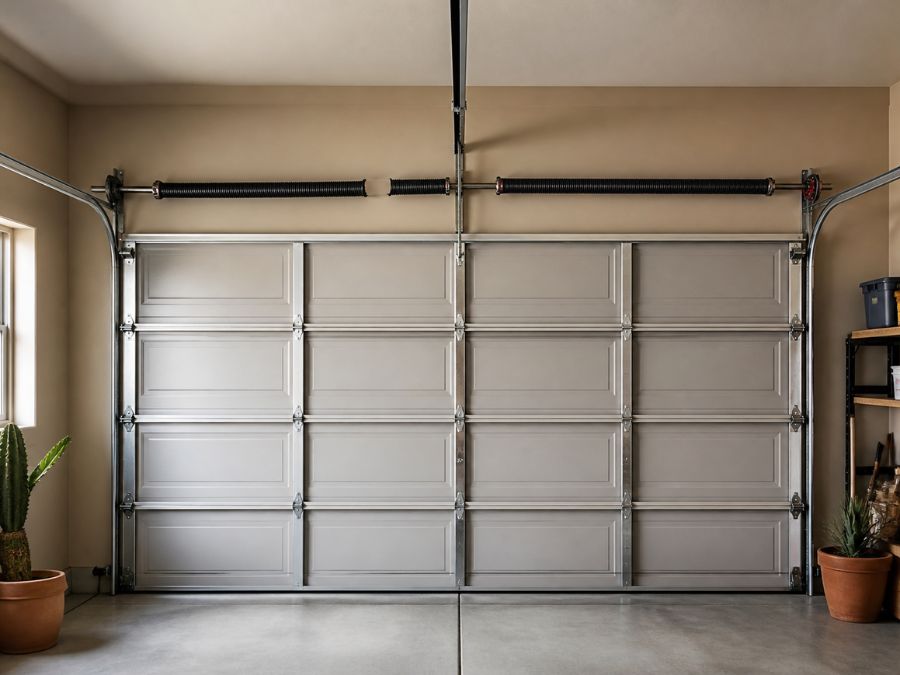
Many double garage doors use two torsion springs mounted above the door. These springs work together to counterbalance the weight of the door. The opener moves the door, but the springs do most of the heavy lifting.
A double steel garage door can weigh hundreds of pounds. Without spring tension, that weight becomes difficult and dangerous to lift. When the springs are properly matched and balanced, the door should move smoothly and feel controlled.
Two springs allow the weight to be shared across the system. They also help the door lift evenly. When one spring breaks, that balance changes immediately. The remaining spring may still be intact, but it is now working in a system that was designed to operate as a matched pair.
Think of Springs Like a Pair of Running Shoes
A simple way to understand spring fatigue is to think about a pair of running shoes. If you run hundreds of miles in the same pair and only replace the left shoe, your stride will feel uneven. The new shoe may be strong, but the old shoe is still worn.
Garage door springs work the same way. If both springs have lifted the same door through thousands of cycles, replacing only one spring creates a mixed system. One spring is new. The other spring still carries years of fatigue.
That uneven “gait” can make the door harder to balance. The opener may still move the door, but it may be working against uneven spring tension. Over time, that can add strain to the motor, rail, belt, chain, sprocket, cables, drums, and top section of the garage door.
In a place like Surprise, where garage doors often act as the front door of the home, that unevenness matters. The system is not just opening once in the morning and closing once at night. It may be cycling all day.
If One Spring Breaks, Is the Other One Usually Close Behind?
Often, yes. If both springs were installed at the same time, they have usually gone through the same number of cycles. One cycle is one full opening and closing of the garage door.
A spring does not have to look broken to be near failure. The metal can be fatigued even if the coil still appears intact. Once one spring snaps, the second spring may have the same age, same wear, and same exposure to heat, dust, vibration, and daily stress.
That is why replacing only one spring can sometimes lead to a second breakdown shortly afterward. A homeowner may fix the door today, only to have the other spring break days, weeks, or a few months later. That can mean another service visit, another trapped car, and another round of inconvenience.
The Surprise Factor: Garage Doors Work Hard Here
Garage door springs are rated by cycles, not calendar years. A spring on a lightly used garage can last much longer than the same spring on a door that opens and closes constantly.
In Surprise, many homes are built around garage centered living. A family in Surprise Farms may use the garage for morning school drop off, work commutes, sports equipment, trash cans, grocery unloading, and evening errands. A homeowner in Sun City Grand may use the main door plus a smaller golf cart door throughout the day. A newer home in Asante or Desert Oasis may have a larger, heavier insulated door or even an RV garage door.
That usage adds up. A household using the garage door 6 to 8 times per day can burn through spring life much faster than a household using it only once or twice. When one spring breaks in a high use home, the second spring is rarely far behind in wear.
The Builder Grade Trap in Asante, Desert Oasis, and Rancho Mercado
Newer homes are not automatically protected from spring problems. In fast growing areas along the 163rd Avenue corridor, including Asante, Desert Oasis, and Rancho Mercado, many homes were built with standard builder grade spring systems.
These springs may be acceptable for light use, but they are not always ideal for the way Surprise homeowners actually use their garages. A standard 10,000 cycle spring can wear out quickly when the garage door is used as the main entrance.
For a family using the door several times a day, a standard spring may reach the end of its useful life in just a few years. That does not mean the spring was defective. It may simply mean the spring was matched to basic builder assumptions rather than the real daily use of the home.
When one builder grade spring breaks, it is a good time to consider high cycle springs. A 25,000 or 50,000 cycle spring upgrade can be a smart way to future proof the door against the daily grind of West Valley living. For high traffic homes, that upgrade can mean the difference between another failure in a few years and a much longer service life.
Replacing Both Springs Helps Restore Proper Balance
A garage door spring repair is not just about getting the door moving again. The real goal is balance.
A properly balanced garage door should lift smoothly, stay controlled through its travel, and not slam down or shoot upward. If one new spring is paired with one old spring, the door can sometimes operate unevenly because the two springs no longer have the same strength.
That imbalance may not always be obvious to the homeowner right away. The opener may still move the door. The door may still close. But the system may be less smooth, and the opener may work harder than it should.
Replacing both springs together gives the technician a matched spring set to work with. That makes it easier to balance the door correctly, protect the opener, and reduce strain on cables, drums, rollers, hinges, bearings, and panels.
Why Door Balance Matters for Safety Systems
Modern garage door safety depends on more than the photo eye sensors near the bottom of the door. The entire door has to move in a controlled way so the opener can properly sense resistance and reverse when needed.
The City of Surprise adopted the 2024 International Codes, including the 2024 International Residential Code, through Ordinance 2025 14, with related local amendments dated January 1, 2026. For homeowners, the practical takeaway is that safe, properly maintained residential systems matter, and garage door balance is a major part of keeping the largest moving part of the home operating correctly.
When a door is poorly balanced, the opener may have to pull harder than it should. That can affect force settings, travel limits, and the way the opener reacts when it meets resistance. A mismatched spring pair can make the door feel lopsided or inconsistent, which is exactly what you do not want on a heavy moving door.
This is another reason replacing both springs is usually the better repair. A matched spring set gives the door a cleaner balance point and helps the opener do its job without fighting uneven tension.
Why Replacing One Spring Can Cost More Later
Replacing one spring may seem less expensive at first. The issue is what happens if the second spring breaks soon after.
A second failure can create another service charge, another repair appointment, and another emergency situation. If the door fails while a vehicle is inside, the inconvenience can matter more than the original savings.
There is also risk to the opener. When a weak or mismatched spring system makes the door harder to lift, the opener may strain. Repeated strain can damage gears, rails, sprockets, belts, chains, or the top section of the garage door.
In that situation, the homeowner may end up paying for the second spring plus opener or hardware repairs that could have been avoided with a properly balanced spring replacement the first time.
When Replacing One Spring Might Make Sense
There are a few cases where replacing only one spring may be reasonable. If the springs are not the same age, the second spring was replaced recently, or the door has a specialized setup that requires a different repair plan, a technician may recommend replacing only the failed spring.
This is why inspection matters. The right answer depends on the spring age, spring size, door weight, cycle history, and condition of the other components.
For example, if one spring was replaced last year and the other is much older, the repair decision may be different. But if both springs are original to the door and one has just snapped, replacing both is usually the cleaner and more practical choice.
One Spring vs Two Springs on a Double Door
Some garage doors are set up with one larger torsion spring instead of two smaller springs. Others use a two spring system. The right setup depends on the door weight, width, height, drum configuration, and hardware design.
For many double doors, a two spring setup is preferred because it distributes the load more evenly and can make the door easier to balance. If one spring breaks on a two spring system, replacing both often keeps the system matched.
A technician should not guess on spring size. Springs need to be matched to the actual door, not just the opening width. Insulated steel doors, carriage house style doors, full view doors, and oversized doors can all require different spring calculations.
This is especially important in Surprise, where homes may have 3 car garage layouts, split 2 plus 1 configurations, golf cart doors, and RV garage doors. The spring setup should fit the door that is actually installed.
How Heat and Dust Make Spring Wear Worse
Surprise garage doors deal with more than regular opening and closing. The local environment adds stress to the full system.
Summer heat causes metal parts to expand and contract. Springs, tracks, hinges, rollers, bearing plates, and torsion hardware all react to extreme temperature swings. Over time, that constant movement can contribute to fatigue.
Dust also plays a role. Fine grit blowing from open desert areas and the White Tank Mountain side of the West Valley can work into rollers, hinges, and bearing points. When the door starts moving roughly, the springs have to work harder each time the door cycles.
A spring may technically be rated for a certain number of cycles, but harsh operating conditions can make the whole system feel older sooner. That is why the second spring should not be judged only by whether it has snapped yet.
How Monsoon Winds Affect a Weak Spring System
A weak or broken spring system is more concerning during monsoon season. When wind moves across the West Valley from the White Tank Mountain side, a large garage door can catch pressure like a sail.
A balanced two spring system provides counter tension that helps keep the door seated firmly and moving evenly. If the door is running on one new spring and one fatigued spring, that balance can be uneven. During a strong White Tank microburst, wind pressure can make the door twist, flex, or push harder against the tracks.
This is especially important for larger garage doors in Asante, Desert Oasis, Rancho Mercado, Surprise Farms, and other open areas north and west of the city center. A healthy spring system helps the door stay controlled. A weak or mismatched spring system can make the door more vulnerable to bent tracks, cable problems, panel creasing, or more serious storm damage.
What Happens If You Keep Using the Door With One Broken Spring?
If one spring is broken, the door should not be operated normally. Even if the opener can move the door slightly, the system is no longer balanced.
The remaining spring may not be strong enough to safely support the door. The cables may lose tension. The door may rise crooked, bind in the tracks, or stop after a few inches. The opener may struggle, reverse, or continue pulling against a door that is too heavy.
A door with a broken spring can also be dangerous if someone tries to lift it manually. Without proper spring support, the door can drop quickly. Keeping people, pets, and vehicles clear of the door is the safest approach until the system is repaired.
What Happens During a Proper Spring Replacement?
A proper spring replacement starts with securing the door. The technician checks the spring system, door weight, cables, drums, bearing plates, rollers, hinges, opener connection, and overall balance.
If both springs are being replaced, the old springs are removed and the new matched springs are installed. The springs are then wound to the correct tension using proper tools. After that, the door is tested by hand before the opener is reconnected.
The balance test matters. The door should feel controlled and should not fall closed or fly upward. Once the door is balanced manually, the opener can be tested under normal operation.
In Surprise, it is also smart to check for heat and dust related wear during the same visit. Dry hinges, gritty rollers, loose fasteners, worn bottom seals, and dragging tracks can all add strain to the spring system.
Should You Upgrade to High Cycle Springs?
For many Surprise homeowners, high cycle springs are worth considering. This is especially true if the garage door is used as the main entrance, the home has multiple drivers, the garage stores a golf cart, or the door opens and closes many times per day.
A high cycle spring is designed for more use over its lifespan. It does not make the door indestructible, and the rest of the system still needs maintenance. But it can reduce the chance of another spring failure in the near future.
This can be a smart option for families in Marley Park, Surprise Farms, Rancho Gabriela, Greer Ranch, and Sierra Montana, where busy daily routines can put a lot of cycles on the door. It can also make sense in Sun City Grand when the garage is used frequently for vehicles, golf carts, and storage access.
How to Make the Right Decision
The best decision depends on how the springs were installed, how old they are, how often the door is used, and how the rest of the system looks. But for a typical two spring garage door where both springs are the same age, replacing both at the same time is usually the better long term repair.
It gives the door a matched spring set. It helps restore proper balance. It reduces the chance of a second breakdown. It can protect the opener from extra strain. And it gives the technician a cleaner foundation for adjusting the whole door system.
If only one spring is replaced, the door may work again, but the repair may not be as complete. The older spring is still carrying old fatigue, old cycles, and old exposure to heat and dust.
A Practical Recommendation for Surprise Homeowners
If your garage door has two springs and one has broken, replacing both is usually the more practical choice. That is especially true in Surprise, where heavy steel doors, high daily use, summer heat, dust, builder grade spring systems, and monsoon conditions all place extra stress on garage door systems.
The goal is not simply to replace a broken part. The goal is to restore safe balance to the door so the opener, cables, rollers, tracks, and panels are not forced to compensate for a worn spring system.
If you are unsure whether one spring or both springs should be replaced, a professional inspection can help you make the decision clearly. A good technician can check the age, condition, cycle wear, spring sizing, opener performance, and balance of the door, then explain whether a matched spring replacement or high cycle upgrade makes the most sense for your home.