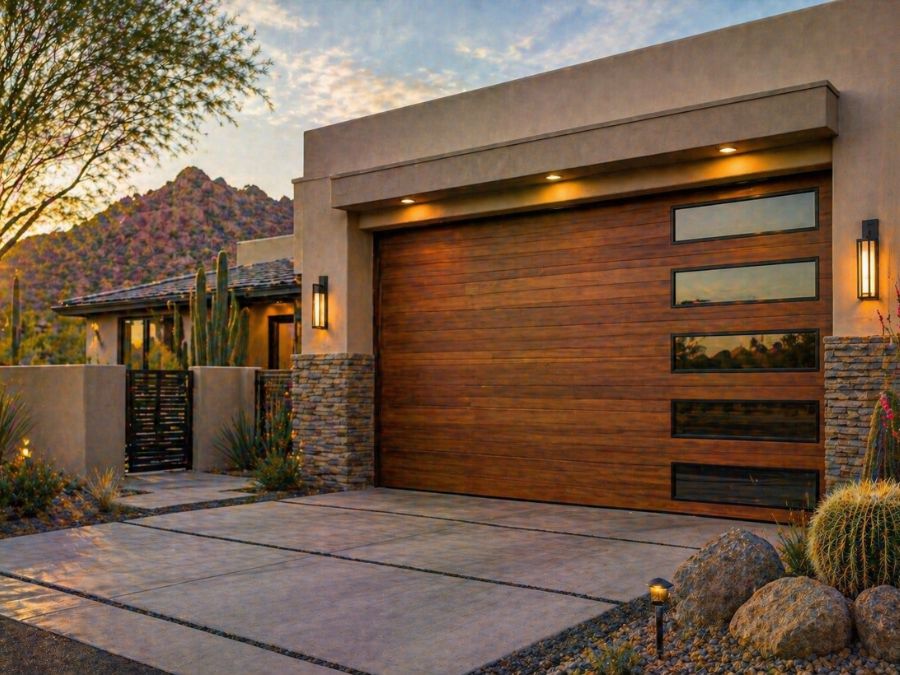
How Long Does A Custom Wood Garage Door Last In Scottsdale’s UV Heat?
In Scottsdale’s intense UV and heat, a custom wood garage door typically lasts 10 to 20 years, depending on maintenance, sun exposure, and material quality. Without proper care, that lifespan can drop significantly due to drying, cracking, and warping. With consistent sealing, refinishing, and upkeep, many homeowners can extend it well beyond the lower end of that range.
Why Wood Doors Behave Differently in the Desert
Wood garage doors look incredible, especially in Scottsdale where design and curb appeal matter. They add warmth and character that steel or aluminum can’t quite replicate. But they also respond to the environment in ways other materials don’t.
Unlike metal doors, wood is organic and constantly reacting to heat, dryness, and sunlight. In a desert climate, that means it’s always expanding, contracting, and losing moisture. Over time, those changes affect both appearance and structure.
That doesn’t make wood a bad choice, it just makes it a commitment. The lifespan depends less on the door itself and more on how well it’s maintained in these conditions.
What Scottsdale’s UV Exposure Really Does
UV exposure is the biggest factor working against wood in this area. The sun breaks down protective finishes first, which leaves the raw material exposed. Once that happens, the wood begins to dry out and lose its natural resilience.
That drying leads to cracking, splitting, and sometimes warping. You may first notice fading or discoloration, but the structural effects come soon after if the finish isn’t maintained. In Scottsdale, this process happens much faster than in milder climates.
West- and south-facing doors take the hardest hit. Those directions get the most consistent and intense sun, which accelerates wear. Over time, that exposure becomes the main driver of how long the door lasts.
The Role of Heat and Dry Air
Heat doesn’t just sit on the surface of a wood door, it penetrates it. Daily temperature swings cause the wood to expand during the heat of the day and contract as it cools. That constant movement creates stress within the material.
Dry air compounds the issue by pulling moisture out of the wood. Without that internal moisture balance, the door becomes more brittle over time. That’s when you start seeing surface cracks and separation at joints.
In Scottsdale, this cycle happens almost year-round. The combination of UV exposure and low humidity makes it one of the toughest environments for wood to hold up long-term.
How Maintenance Changes the Lifespan
Maintenance is what separates a 10-year door from a 20-year door. A wood garage door that’s regularly sealed and refinished can handle Scottsdale conditions much better. That protective layer is what keeps UV and heat from directly damaging the wood.
Most homeowners don’t realize how often that protection needs to be reapplied. In this climate, refinishing may be needed every couple of years depending on exposure. Skipping that step is usually when problems start to show.
Cleaning also plays a role, especially with dust buildup. Keeping the surface clear helps preserve the finish and allows you to spot early signs of wear. Small maintenance steps add up over time.
Signs Your Wood Door Is Aging Faster Than It Should
One of the first signs is uneven fading or discoloration. That usually means the protective finish is wearing down in certain areas. Once that starts, the underlying wood is already being exposed.
You may also notice small cracks forming or the surface feeling rougher than it used to. Warping is another indicator, especially if the door no longer sits perfectly flush. These changes often happen gradually but become more noticeable over time.
Operational issues can also show up. A door that feels heavier, louder, or slightly uneven may be reacting to structural changes. That’s when it’s worth taking a closer look before the damage progresses.
When Wood Doors Still Make Sense in Scottsdale
Despite the challenges, wood garage doors are still a popular choice in Scottsdale. In higher-end neighborhoods, they often match the architectural style better than other materials. That visual impact can outweigh the added maintenance for many homeowners.
They also perform well when installed in shaded areas or with some level of sun protection. Overhangs, landscaping, or strategic placement can reduce direct exposure. Those factors can make a noticeable difference in lifespan.
For homeowners willing to maintain them properly, wood doors can still be a long-lasting option. It just requires a realistic understanding of what the environment demands.
Alternatives That Mimic Wood Without the Same Wear
Some homeowners choose wood-look alternatives to avoid the maintenance cycle. Steel or composite doors with woodgrain finishes can provide a similar appearance. These options are designed to handle UV exposure with less upkeep.
They won’t replicate real wood perfectly, but they come close enough for many applications. The trade-off is less maintenance and more consistent performance over time. In a climate like Scottsdale, that’s often an appealing balance.
Choosing between real wood and alternatives usually comes down to priorities. It’s a question of authenticity versus long-term convenience.
Making the Right Call for Your Home
A custom wood garage door can absolutely last in Scottsdale, but it won’t take care of itself. The environment here is tough, and wood responds to it more than other materials. If you’re willing to stay on top of maintenance, it can be a great long-term feature.
If maintenance isn’t something you want to deal with regularly, it’s worth considering alternatives upfront. That decision usually comes down to how much value you place on the look and feel of real wood.
Either way, understanding what the sun and heat will do over time puts you in a better position. It’s not about avoiding wear, it’s about managing it before it turns into a bigger issue.