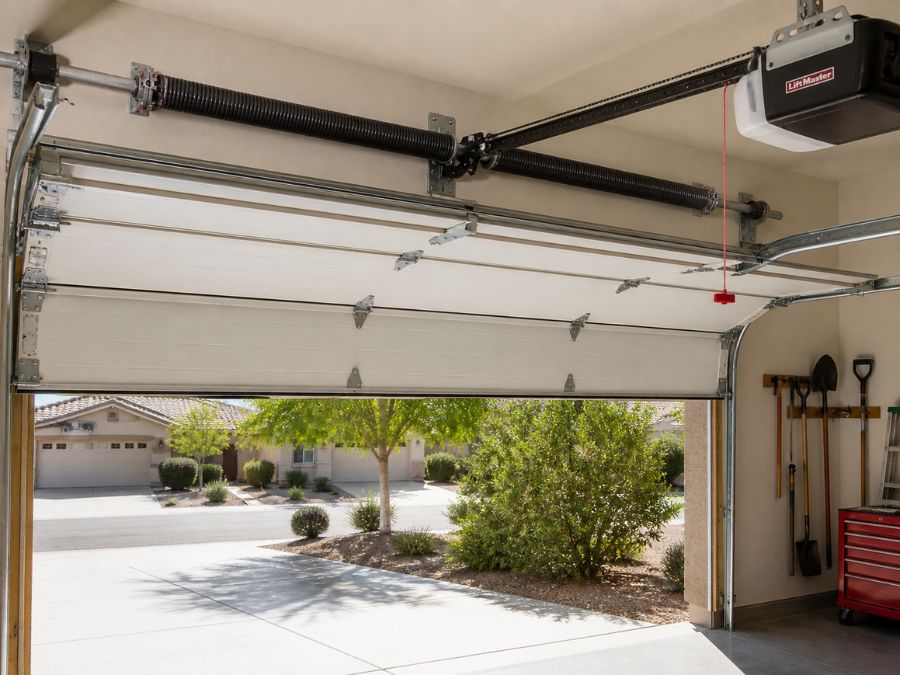
How Long Do Garage Door Springs Last In Surprise, AZ With The Heat?
In Surprise, AZ, garage door springs typically last 5 to 7 years, depending on usage and maintenance. Extreme heat accelerates wear, often shortening their lifespan compared to cooler climates. Upgrading to high-cycle springs can extend that lifespan significantly.
Why Spring Lifespan Is Shorter in Surprise
Garage door springs don’t fail randomly—they wear out over time. In Surprise, the intense heat speeds up that process. Daily exposure to high temperatures weakens the metal and reduces flexibility.
Most standard springs are rated for about 10,000 cycles, which equals one open-and-close movement. In a typical household, that can translate to several years of use. In Arizona heat, those cycles tend to “age faster” due to constant thermal stress.
That’s why homeowners here often replace springs sooner than expected. The environment plays a bigger role than most people realize.
How Heat Affects the Metal
Heat causes metal to expand during the day and contract as temperatures drop at night. This constant expansion and contraction creates stress inside the spring. Over time, that weakens its structural integrity.
In extreme conditions, the metal becomes more brittle. That makes it more likely to snap under tension. When a spring breaks, it usually happens suddenly and without warning.
This is one of the most common summer breakdowns I see in Surprise. The hottest days are often when springs finally give out.
The Role of Daily Usage
How often you use your garage door matters just as much as the heat. A door that opens and closes multiple times a day will wear through its cycle rating faster. In many homes, the garage is the primary entrance.
That means springs may reach their limit sooner than expected. Even if they’re only a few years old, heavy use combined with heat can accelerate failure. It’s not uncommon for active households to see shorter lifespans.
Usage and climate work together. You can’t change the heat, but you can understand how it affects wear.
Standard Springs vs. High-Cycle Springs
Not all garage door springs are built the same. Standard springs are typically rated for around 10,000 cycles. In Surprise, that often translates to about 5 to 7 years of use.
High-cycle springs are designed to last longer, often rated for 25,000 cycles or more. That can extend lifespan closer to 10 years, even in hot conditions. They cost more upfront but reduce how often you need replacements.
For many homeowners, the upgrade is worth it. It’s a long-term solution in a climate that’s tough on equipment.
Signs Your Springs Are Wearing Out
Garage door springs usually give some warning before they fail completely. You may notice the door feeling heavier when opening manually. The opener may also start to struggle or move more slowly.
Other signs include uneven movement or a door that doesn’t stay in place when partially open. These changes often happen gradually, which makes them easy to overlook. By the time the spring breaks, the warning signs were already there.
Paying attention to these changes helps you avoid getting stuck with a broken door. Early detection makes replacement easier to plan.
Why Summer Is Peak Failure Season
In Surprise, most spring failures happen during the hottest months. The combination of extreme heat and daily use pushes springs to their limit. This is when existing wear finally turns into a break.
The sudden temperature spikes during summer days add extra stress. Springs that are already weakened can’t handle the added strain. That’s why failures often feel unexpected.
It’s not that summer creates the problem—it exposes it. The damage has usually been building for months or years.
How Maintenance Affects Lifespan
Proper maintenance can help extend the life of your springs. Lubrication reduces friction and prevents the metal from drying out. In Arizona, this step is especially important due to the dry climate.
Using a high-temperature silicone or lithium-based lubricant works best. Standard sprays tend to break down quickly in heat. Applying lubricant every few months helps keep the springs operating smoothly.
Maintenance won’t stop wear completely, but it slows it down. That can add meaningful time before replacement is needed.
What Happens When a Spring Breaks
When a garage door spring breaks, the door usually won’t open. In some cases, it may feel extremely heavy or get stuck halfway. This can leave your vehicle trapped inside or outside the garage.
Trying to operate the door with a broken spring can damage the opener. The system isn’t designed to lift the full weight of the door without spring support. That’s why it’s best to stop using it immediately.
Spring replacement is not a DIY-friendly repair. The tension involved makes it dangerous without the right tools and experience.
When It’s Time to Replace Instead of Wait
If your springs are approaching the 5- to 7-year range in Surprise, it’s worth planning ahead. Waiting for them to break can create an inconvenient and potentially unsafe situation. Proactive replacement avoids emergency repairs.
Upgrading to high-cycle springs at that point is usually the better move. It reduces how often you’ll need to deal with the issue again. In a climate like this, durability matters.
Replacing springs before failure gives you more control over timing. It’s a small decision that prevents a bigger problem later.
What This Means for Surprise Homeowners
Garage door springs are one of the most stressed components in your system, especially in Arizona heat. While they’re designed to wear out eventually, the climate here speeds up that process. Understanding that helps you stay ahead of failures.
Most homeowners don’t think about springs until they break. By then, it’s already an urgent repair. Paying attention to lifespan and early warning signs makes a big difference.
If your door has been in place for several years, it’s worth taking a closer look. In Surprise, heat is always working in the background—you just don’t see it until something gives out.