What Garage Door Styles Are Approved for Troon, Gainey Ranch, and Desert Mountain HOAs in Scottsdale?
Quick Answer:
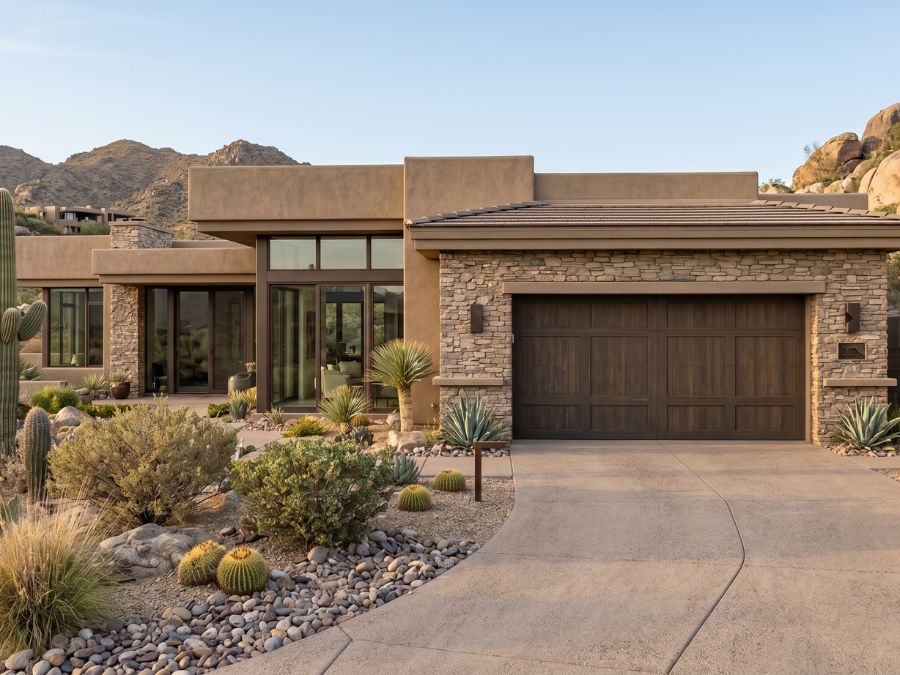
Approved garage door styles in Troon, Gainey Ranch, and Desert Mountain must follow strict desert integration guidelines. This typically includes carriage-style, custom wood, or hand-finished composite doors in muted desert tones, often with a Light Reflective Value under 35 to prevent glare. Modern glass doors are usually rejected unless the home follows a true contemporary, Wright-inspired design. In these communities, even high-end doors will be denied if they don’t match the architecture exactly.
Why Garage Door Style Matters in Scottsdale HOAs
In Scottsdale, especially in communities like Troon, Gainey Ranch, and Desert Mountain, garage doors are treated as a major architectural element—not a secondary feature.
When we’re working in these neighborhoods, we’re not just selecting something functional. We’re choosing a surface that can either blend seamlessly into the home or disrupt the entire elevation. Because garage doors take up such a large visual footprint, even subtle mismatches in tone, proportion, or finish can stand out immediately.
These communities are built around consistency. The HOA’s job is to preserve that consistency, which is why the review process is focused on alignment rather than preference.
The Core Rule Across All Three Communities
Even though each HOA has its own guidelines, the core expectation is consistent.
The garage door must feel like it was designed with the home from the beginning. That means matching architectural style, maintaining proportional balance, and using materials and finishes that appear authentic in the context of the property.
Anything that feels added, overly modern, or visually disconnected will likely be flagged during review.
Approved Styles in Troon
Troon communities, including Troon North and Troon Village, are heavily influenced by desert and southwestern architecture.
Most approved garage doors here lean toward traditional, grounded designs that complement natural materials like stone and stucco. Carriage-style doors are common, often with vertical paneling and understated hardware that reinforces the rustic aesthetic without becoming decorative for its own sake.
Color selection is equally important. Darker desert tones—weathered browns, bronzes, and muted wood finishes—tend to perform best in ARC reviews because they integrate with the surrounding landscape. Windows are typically minimal and controlled, designed to support symmetry rather than draw attention.
Modern glass doors or high-gloss finishes are rarely approved unless the home was designed with a contemporary architectural intent from the start.
Approved Styles in Gainey Ranch
Gainey Ranch follows a more refined “coastal desert” aesthetic, with strong Mediterranean influence.
When we’re working in this community, the emphasis is on balance and restraint. Garage doors are expected to feel clean and proportional, supporting the home’s stucco finishes and clay tile rooflines rather than competing with them.
Recessed or raised panel designs tend to be the most consistently approved, especially when finished in warm neutral tones like sand, taupe, or soft brown. These colors are often aligned with common palettes from brands like Dunn-Edwards or Sherwin-Williams desert-tone collections, which HOAs frequently reference.
Compared to Troon or Desert Mountain, Gainey Ranch offers slightly more flexibility, but the expectation remains the same—the door should blend into the home, not stand out from it.
Approved Styles in Desert Mountain
Desert Mountain operates at a different level when it comes to architectural scrutiny.
This community follows a strong desert integration philosophy, heavily influenced by Frank Lloyd Wright principles. The goal is for structures to feel embedded in the landscape, not imposed on it. Garage doors are expected to follow that same philosophy.
We often see horizontal plank designs on contemporary homes and custom wood or wood-overlay doors on more traditional builds. In both cases, the finish is carefully selected to match surrounding materials, including beams, fascia, and exterior walls.
Desert Mountain also has a more structured review environment. The ARC meets regularly, often multiple times per month, and works through a detailed submission process. There is typically a dedicated Architectural Review Manager overseeing approvals, which reinforces how seriously design consistency is treated within the community.
The Desert Mountain Reflectivity Rule
In hillside areas like Desert Mountain, the HOA doesn’t just evaluate color—they evaluate reflectivity.
A garage door that appears correct in color can still be rejected if it reflects too much sunlight. In canyon settings, a reflective surface can project glare into neighboring homes, which is why many guidelines emphasize low-sheen or matte finishes.
In practical terms, this means avoiding glossy paints or finishes that amplify sunlight. We often recommend matte powder-coated steel or hand-finished wood overlays that absorb light rather than reflect it. This small detail can make the difference between approval and rejection.
The “Material Authenticity” Standard Across All Three
Material authenticity is one of the most consistent approval factors across all three communities.
We’ve seen many doors that look acceptable in a showroom fail once installed. Faux wood finishes can appear flat when placed next to real wood beams, and standard steel doors often lack the depth required for higher-end homes.
That’s why we frequently move toward custom-clad solutions. These combine a structural steel base with real wood or high-definition composite overlays, allowing the door to meet both durability and aesthetic requirements.
The goal is not just to match the color—it’s to match the texture, depth, and visual weight of the surrounding materials.
Color Restrictions and LRV Requirements
Color selection in these communities is tightly controlled, and it goes beyond simply choosing a neutral tone.
HOAs often reference established desert palettes, frequently aligned with paint systems like Dunn-Edwards or Sherwin-Williams. These palettes are designed to complement the natural environment and avoid harsh contrast.
In more sensitive areas like Desert Mountain, color is also evaluated based on Light Reflective Value. Many guidelines aim for lower LRV ranges, often around 35 or below, to minimize glare and maintain visual harmony across hillside properties.
This is one of the most overlooked factors in garage door selection, but it plays a major role in approval outcomes.
Window Design and Placement
Window design is another area where small details can lead to rejection.
It’s not enough for a garage door to include windows—they must align with the home’s architecture. In these communities, symmetry and consistency are critical. Windows should follow the same horizontal and vertical lines as existing openings on the home.
Oversized glass panels or asymmetrical layouts are typically rejected unless the home’s design specifically supports that style. Most approved doors use controlled, balanced window placements that enhance the elevation without drawing attention.
The Reality Check Most Homeowners Run Into
We get a lot of calls from homeowners who have already selected a garage door they love, only to find out it doesn’t meet HOA standards.
In many cases, the issue isn’t obvious. The door may be high-quality and visually appealing, but something about it doesn’t align with the neighborhood—whether it’s the panel proportions, the finish tone, or the window layout.
But in these communities, “almost right” doesn’t pass.
If the door doesn’t match the guidelines closely, it can be denied outright. And if it’s already installed, the HOA can require full replacement at the homeowner’s expense.
Why You Should Always Submit Before Ordering
This is one of the most important steps in the entire process.
Ordering a garage door before HOA approval can create major delays, especially when dealing with custom or semi-custom products. These doors often have long lead times and limited return options, which means a rejection can significantly impact both timeline and cost.
In Troon, Gainey Ranch, and Desert Mountain, approval is not a formality—it’s the deciding factor. Starting with the submission ensures alignment before any commitment is made.
What a Successful Approval Looks Like
When the process is handled correctly, approval tends to move efficiently.
The door design aligns with the home’s architecture, the materials meet authenticity standards, and the finish falls within the HOA’s approved palette and reflectivity range. Because everything is aligned upfront, the review process is smoother and avoids unnecessary revisions.
That preparation is what keeps the project on track.
FAQs
Are modern glass garage doors allowed in these Scottsdale communities?
In most cases, no. They are typically only approved if the home was designed as a contemporary or Wright-inspired structure that supports that style.
Can I install a wood-look garage door instead of real wood?
Yes, but it must meet HOA standards for realism and finish quality. Lower-end faux wood options are often rejected.
Do I need HOA approval just to change the color?
Yes. Any visible exterior change, including color, usually requires ARC approval.
What happens if my garage door is not approved?
The HOA may deny the application or require revisions. If installed without approval, you may be required to remove and replace it.
Are there pre-approved styles I can choose from?
Some communities provide guidelines or examples, but most still require a formal submission for your specific home.
Why This Matters in Scottsdale
In communities like Troon, Gainey Ranch, and Desert Mountain, garage door selection is about more than function—it’s about maintaining architectural integrity.
Choosing the right style from the beginning and aligning it with HOA expectations is what keeps the process smooth and avoids costly mistakes. Understanding those standards ahead of time is what separates a straightforward project from a frustrating approval process.