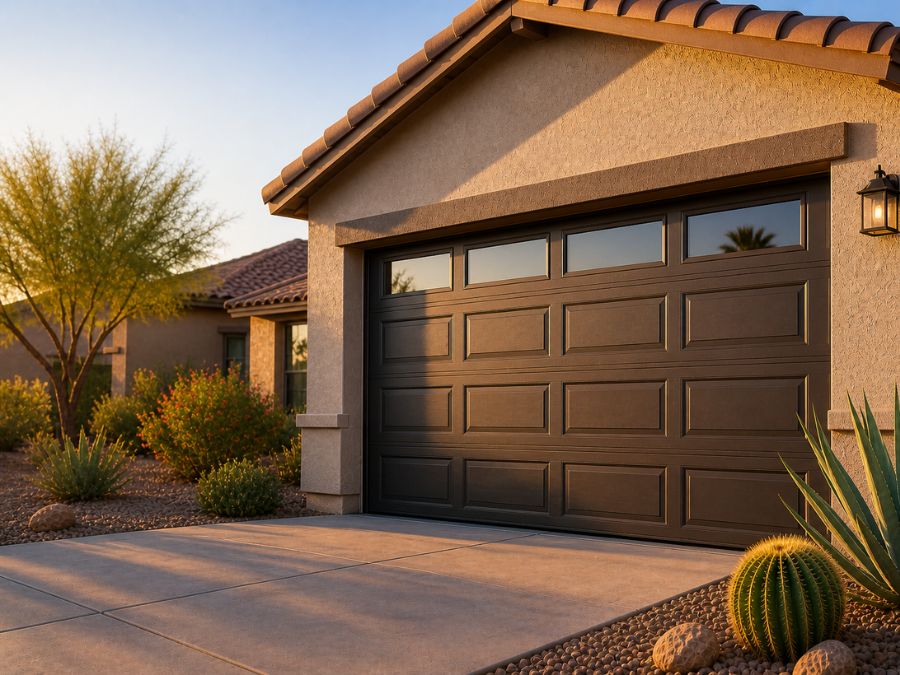
What Type Of Garage Door Is Best For Gilbert, AZ Heat?
In Gilbert, AZ, the best garage door is a triple-layer insulated steel door with polyurethane insulation and a light, UV-resistant finish. These doors can reduce garage temperatures by 20°F to 30°F compared to non-insulated options. The right combination of insulation, material, and hardware makes a noticeable difference in both comfort and durability.
Why Garage Doors Matter More in Gilbert Than Most Places
Gilbert summers aren’t just hot—they’re relentless. It’s common for outdoor temperatures to exceed 110°F, and garage interiors can climb even higher. That heat doesn’t just sit there—it transfers directly into your home and affects everything inside.
Your garage door plays a major role in that heat buildup. It’s one of the largest exposed surfaces on the house, often facing direct sun for hours. If the door isn’t built for desert conditions, it acts more like a heat amplifier than a barrier.
That’s why choosing the right door here isn’t just cosmetic. It’s a performance decision that affects comfort, energy use, and long-term reliability.
The Gold Standard: Triple-Layer Insulated Steel Doors
If you’re looking for the best overall solution, triple-layer insulated steel doors are the clear choice. These are often called “sandwich” doors because they combine two layers of steel with insulation sealed in between. That structure creates both strength and thermal resistance.
The outer steel layer handles UV exposure, while the inner layer adds stability and insulation protection. This design prevents warping, which is a common issue in extreme heat. It also helps the door maintain its shape and function over time.
In Gilbert, this type of door consistently outperforms single- or double-layer options. It’s built specifically for environments where heat is a constant factor.
Why Insulation Type Matters More Than Thickness
A lot of homeowners assume thicker doors automatically mean better insulation. In reality, the type of insulation matters more than the thickness itself. This is where the difference between polyurethane and polystyrene becomes important.
Polyurethane insulation is injected as a liquid and expands to fill every gap inside the door. It bonds to the steel layers, making the entire door more rigid and energy-efficient. This type of insulation delivers higher performance and better long-term durability.
Polystyrene, on the other hand, comes in rigid panels. It’s more affordable but leaves small gaps where heat can pass through. In Gilbert, it works best only in shaded garages or north-facing setups.
What R-Value You Should Actually Look For
R-value measures how well a garage door resists heat transfer. In a desert climate like Gilbert, this number becomes extremely important. The higher the R-value, the better the door performs against heat.
For most homes, an R-value between 12 and 18 is ideal. That range provides strong insulation without overcomplicating the setup. It’s especially important for attached garages where heat can move into living spaces.
High-end systems like polyurethane-insulated doors often fall into this range. That’s where you’ll see the biggest improvement in temperature control.
Why Steel Still Wins in Arizona
Steel remains the most reliable material for garage doors in Gilbert. It handles direct sun exposure better than most alternatives and doesn’t crack or warp easily. When paired with proper insulation, it becomes one of the most durable options available.
The key is choosing multi-layer steel with protective coatings. This prevents long-term damage from UV exposure and keeps the door structurally sound. Thin or uncoated steel doors don’t perform the same way.
In this environment, durability isn’t optional. Steel provides that baseline reliability when it’s built correctly.
The Truth About Wood and “Wood-Look” Doors
Real wood garage doors may look great at first, but they don’t hold up well in Gilbert heat. Constant sun exposure causes fading, cracking, and drying within a short period. Without regular refinishing, they deteriorate quickly.
That’s why composite wood-look doors have become more popular. These use UV-resistant materials that mimic wood without the maintenance. They provide the same visual appeal without the long-term issues.
For most homeowners, this is the better compromise. You get the style without committing to constant upkeep.
Why Color Makes a Bigger Difference Than You Think
Color has a direct impact on how much heat your garage door absorbs. Dark colors like black or deep brown hold significantly more heat throughout the day. That heat transfers into the garage and raises internal temperatures.
Lighter colors like white, almond, or sand reflect sunlight instead of absorbing it. This simple choice can reduce heat buildup more than most people expect. It’s one of the easiest ways to improve performance without changing materials.
In Gilbert, color isn’t just about aesthetics. It’s part of the overall heat-control strategy.
The Hardware That Most People Overlook
The door itself matters, but the hardware plays a big role in long-term performance. Standard steel rollers can expand in high heat and create noise or resistance. That’s why nylon rollers with sealed bearings are a better option.
Springs are another weak point in extreme temperatures. Standard springs wear out faster and are more likely to fail under heat stress. Upgrading to high-cycle torsion springs significantly improves lifespan and reliability.
Lubrication also matters more here than in cooler climates. High-temperature silicone or lithium-based lubricants hold up better and prevent components from drying out.
Real-World Models That Perform Well in Gilbert
Certain garage door models are designed specifically for environments like Arizona. High-performance insulated steel doors with polyurethane cores consistently deliver better results. These systems combine durability, insulation, and long-term reliability.
Doors like Clopay’s insulated steel lines, Amarr Heritage models, and Wayne Dalton’s insulated systems are common choices. They provide strong thermal performance without sacrificing design flexibility. That’s why they’re widely used in desert climates.
The exact model matters less than the construction. What you’re really looking for is insulation quality, steel strength, and UV protection.
What This Means for Your Garage Long-Term
In Gilbert, the wrong garage door will show problems quickly. Heat exposure doesn’t take years to cause damage—it happens within seasons. Choosing the right door from the start prevents that cycle.
A properly built insulated steel door keeps your garage cooler, reduces strain on your home, and lasts longer overall. It also protects your opener and other components from heat-related wear. That’s where the real value comes from.
If you’re replacing your garage door, this is one decision that pays off every single summer. It’s not just about what looks good—it’s about what performs when temperatures peak.